
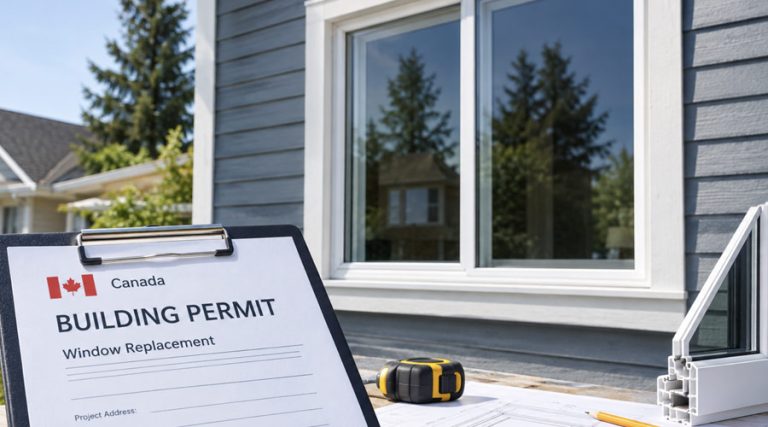
Window Replacement Permit: When You May Need One in Canada
A window replacement permit may be required when the opening, structure, use, appearance or building type changes. Learn what to verify locally before ordering windows or starting work.

Home » Windows Tips » Can I Replace My Own Windows? (A Realistic Look at DIY vs. Pro)
In Canada, windows are more than just architectural design details; they are a critical barrier against extreme seasonal swings, enduring everything from humid summers to bone-chilling -30°C winters. When homeowners notice drafts or rising energy bills, the immediate thought is often a DIY weekend project: “Can I replace my own windows?”
While the internet is filled with tutorials making window installation look as simple as driving a few screws, the reality of Canadian construction is far more demanding. Technically, an experienced handyperson can replace a window. However, behind the allure of immediate labour savings lies a minefield of technical challenges, strict building codes, and high-stakes precision. This guide breaks down the cold, hard reality of DIY window replacement to help you decide when to pick up the tools and when to call in the professionals.
So the real question isn’t just:
“Can I replace my own windows?”
The better question is:
“Is this a simple retrofit, or a full-frame installation where precision measurements, air sealing, flashing, code compliance, and warranty risks make hiring a pro the only sensible option?”
Many homeowners believe that measuring a window simply involves stretching a tape measure from one side of the visible frame to the other. In reality, ordering a window based on these numbers is the fastest way to ruin a renovation project before it even begins. Accurate measurement requires reaching the Rough Opening (RO), the structural wooden or steel framing hidden behind your interior drywall and exterior siding.
When tackling measurements without professional training, several critical factors are frequently overlooked:
Houses Settle Over Time: A window opening that looks perfectly rectangular is often warped. Professionals always measure the width and height in at least three different places (top, middle, bottom) and cross-measure the diagonals to check for true squareness.
Why Vinyl Moves: Modern vinyl and aluminum windows expand and contract significantly between January freezes and July heatwaves. A window must be ordered slightly smaller than the rough opening (typically 1/4 to 1/2 inch smaller) to allow for this physical movement and leave room for insulation. If you order a window that fits tightly against the studs, the frame will bow and jam as soon as the temperature shifts.
High-performance, energy-efficient windows are manufactured to order under strict factory tolerances. If your DIY measurement is off by even a quarter of an inch, the window will either fail to fit or leave a massive gap that destroys your home’s thermal envelope. Because these units are custom-made, manufacturers will not accept returns or modifications. A single measurement mistake means buying the same expensive window twice.
Simple takeaway: Measuring a window isn’t just about matching the old frame; it’s about calculating precise rough openings, factoring in thermal expansion tolerances, and absorbing 100% of the financial risk if a custom order fails to fit.
Before deciding to replace a window yourself, it is vital to understand that “window replacement” describes two completely different structural procedures, each requiring a different level of expertise:
In a retrofit installation, the existing wooden or vinyl frame remains intact inside the wall. The old moving sashes are removed, and a new, slightly smaller window unit is slid directly into the old frame. While this method is faster and less disruptive to interior trim and exterior siding, it is only viable if the original structural frame is completely free of wood rot, mould, and water damage. Retrofit installation narrows your total visible glass area and acts as a temporary fix if the underlying wall structure is already compromised.
A full-frame replacement is a comprehensive surgical operation on your home’s building envelope. The entire window system, including the glass, frame, interior casing, exterior brickmould, and structural flashing, is completely torn out down to the raw studs. This method is highly recommended for older Canadian homes because it allows installers to inspect the interior wall for hidden moisture damage, replace rotting wood, and install modern insulation. However, full-frame replacement requires rebuilding the water management layers of your exterior wall. One mistake during this deep tear-out can lead to catastrophic structural failures down the road.
| Installation Type | What It Means | DIY Risk Level |
|---|---|---|
| Retrofit / Insert Window | The existing frame stays in place and a smaller new unit is inserted into it. | Lower, but only if the existing frame is dry, square, and structurally sound. |
| Full-Frame Replacement | The full window system is removed down to the rough opening, including trim, frame, flashing, and insulation layers. | High. Errors can affect water management, insulation, warranty, and structural protection. |
Simple takeaway: Retrofit installation may look DIY-friendly, but full-frame window replacement is usually a building-envelope project, not just a window swap.
Beyond precise measurements, window replacement requires a solid understanding of material science. DIYers frequently make the mistake of buying standard, off-the-shelf products from the local hardware store just to save a few dollars. In the harsh Canadian climate, however, using the wrong installation compounds can warp your window frames, cause seal failures, or trap hidden moisture inside your walls. Here are the most critical material mistakes made during DIY installations:
Buying regular construction insulation foam is a classic blunder. Standard foam expands with massive pressure and cures into a completely rigid block. In the winter, when vinyl or aluminum window profiles contract from the cold, this rigid foam can bow, warp, or crush the frame. This causes the moving sashes to jam and ruins the window’s airtight seal. Professionals instead use specialized, low-expansion window and door foam that remains flexible after curing, acting as a dynamic cushion that moves naturally with the frame.
The exterior perimeter joint between the window frame and your home’s siding must withstand annual temperature swings of up to 60°C. Cheap silicone or acrylic caulking quickly dries out, cracks, and pulls away from the substrate after just one or two winters, allowing cold drafts and driving rain to penetrate the gap. Certified installers rely on high-performance polyurethane or quad-polymer exterior sealants that maintain maximum elasticity for decades, resist UV degradation, and bond securely even in freezing temperatures.
A window must be properly integrated into your home’s existing weather-resistive barrier (house wrap). Skipping self-adhesive flashing tapes or using cheap alternatives not rated for low temperatures allows water behind your siding to run directly into the rough opening. This triggers hidden wood rot inside the wall cavity that often goes unnoticed until structural damage becomes severe. Furthermore, standard DIY flashing tapes lose their adhesion completely if installed below 5°C, whereas professional-grade cold-weather tapes require specific primers to bond safely.
Compare local window companies, installation methods, warranties, energy ratings, and replacement options before choosing a contractor.
Even if you buy the best installation materials, mounting a window demands near-surgical precision. A standard household toolbox equipped with just a basic hammer, a screwdriver, and a short pocket level is completely inadequate for achieving a secure, energy-efficient installation.
Professional window replacement requires heavy-duty, calibrated equipment. This includes four-foot and six-foot professional levels, plumb bobs, specialized reciprocating saws to cleanly extract old frames without fracturing the rough opening, and professional foam guns for accurate, controlled application.
The core technical challenge is that the window unit must be perfectly balanced across three distinct spatial planes: plumb (strictly vertical), level (strictly horizontal), and square (completely flat and true within the opening). The professional industry tolerance for error is remarkably unforgiving—no more than 1 to 2 millimetres across the entire span of the unit.
If your DIY setup shifts or goes out of alignment by even a tiny fraction, the long-term consequences can be severe:
Simple takeaway: Window installation isn’t just about screwing a frame into place; maintaining a strict 1-to-2-millimetre tolerance across plumb, level, and square planes requires professional tools and advanced alignment skills.
Replacing a window yourself isn’t just a demanding physical chore; it is a high-stakes project carrying heavy financial and structural accountability. Before deciding to manage this upgrade independently, weigh the long-term risks that can easily erase any upfront savings on labour costs.
The vast majority of premium Canadian window manufacturers include strict clauses regarding installation in their product documentation. Warranties covering the vinyl profile, hardware, and sealed glass units typically remain valid only if the installation is completed by certified professionals or adheres strictly to CSA (Canadian Standards Association) guidelines. If you install a unit yourself and experience a thermal glass fracture or frame warping later on, the manufacturer can easily deny your claim due to improper installation—leaving you to cover the full replacement cost out of your own pocket.
The most dangerous DIY installation mistakes are the ones completely hidden from view. When a perimeter joint is poorly sealed or insulated, warm, indoor air seeps into the wall cavity and condenses against the cold exterior frame. Over months and years, this trapped moisture fosters toxic black mould and wood rot. Because this destruction occurs entirely within the wall envelope, you will likely remain unaware of the issue until mould breaks through the drywall or structural sagging begins, resulting in thousands of dollars in remediation bills.
While a professional crew can remove and fully replace all the windows in a standard home within a single working day, an unassisted DIYer can easily spend an entire weekend properly setting, insulating, and flashing just one complex window. Throughout this slow learning curve, your home’s structural envelope remains completely open and exposed to unpredictable Canadian weather, leaving your interior drywall, flooring, and furniture vulnerable to sudden rainstorms, strong winds, and heavy construction dust.
Simple takeaway: DIY installation carries high financial and structural stakes—ranging from voided product warranties and hidden wall rot to extended weather exposure—that can quickly outweigh any initial labor savings.
While a DIY approach might initially look like a way to save money, window replacement is a high-stakes project where a single error can compromise your home’s overall energy efficiency. Navigating the market to find a trustworthy professional can certainly feel daunting, but utilizing a dedicated directory simplifies the search while safeguarding your investment. Here is why connecting with a vetted professional through our platform represents the smartest choice for your project:
When hiring an unverified contractor or attempting a DIY installation yourself, you risk forfeiting valuable product warranties. Our directory connects you with established, local window companies offering a comprehensive “double warranty” that covers both the physical window product and the installation labour. Should any issues arise post-installation, you have complete peace of mind knowing a certified professional is legally bound by contract to resolve them.
Window installations must strictly comply with provincial regulations concerning Energy Ratings (ER) and bedroom egress safety codes. The contractors featured in our directory are fully certified specialists who understand local building codes inside and out, guaranteeing your home stays safe, fully compliant, and legally prepared for any future real estate resale.
Working at heights on ladders while handling heavy glass panes is inherently dangerous. Every reputable company in our database carries full insurance coverage and operates under provincial worker compensation boards. This shifts all legal and financial liability completely away from you—meaning any accidental property damage or on-site injury is handled entirely by the contractor’s coverage rather than your personal homeowner’s insurance.
Use these questions before deciding whether to install a window yourself.
1
Can you access and accurately measure the true rough opening? Can you strip back drywall and siding to calculate hidden framing dimensions, factoring in structural settling and tight millimeter tolerances?
2
Do you know whether this is retrofit or full-frame replacement? Are you prepared to choose between a simple insert swap and a deep full-frame tear-down that impacts your home’s structural building envelope?
3
Do you have low-expansion window and door foam, proper sealants, and flashing tape? Do you possess specialized non-expanding foams, flexible exterior sealants, and cold-weather flashing tapes?
4
Can you set the unit plumb, level, square, and airtight within tight tolerances? Can you align the frame within a strict one-millimetre tolerance?
5
Will DIY installation affect product warranty, labour warranty, or code compliance? Are you ready to risk voiding manufacturer warranties and failing local building inspections?
6
Can you protect the opening from rain, wind, dust, and cold during the work? Can you shield your home’s exposed structural envelope against sudden weather storms and cold drafts?
Tip: If the answer to any of these questions is unclear, compare professional quotes before ordering custom windows.
Tackling a window replacement project as a casual weekend DIY chore rarely justifies the hidden risks. While the temptation of saving on labour costs is understandable, the harsh reality of severe Canadian winters, unforgiving two-millimetre installation tolerances, and costly measuring mistakes means a single error can easily translate into thousands of dollars in structural repairs. For the vast majority of homeowners, upgrading windows is a foundational, long-term investment in thermal efficiency, household security, and property aesthetics that is far better entrusted to seasoned specialists.
Fortunately, you do not have to wander through the hiring maze alone or gamble on unverified handymen. Our directory simplifies the entire search by aggregating top-tier, fully licensed, and code-compliant window installation contractors across Canada. Skip the frustration of a DIY disaster, safeguard your valuable product warranties, and guarantee your living space stays comfortable through every season. Browse our comprehensive directory today to compare trusted local experts, review genuine customer feedback, and request no-obligation quotes from certified window professionals near you.
WindowsDoorsPro helps homeowners learn about window replacement options, compare local companies, and understand what to ask before starting a project.
A window replacement permit may be required when the opening, structure, use, appearance or building type changes. Learn what to verify locally before ordering windows or starting work.

A practical framework for generating qualified window and door leads, selecting channels, controlling response and attribution, and avoiding common compliance and quality failures.

A practical framework for moving qualified window and door opportunities through consistent stages, producing evidence-based forecasts and aligning sales activity with operational capacity.

A practical KPI framework for Canadian window and door companies, with controlled definitions, formulas, reporting rules and management actions.