
Doors Knowledge Base
Understand the main types of doors used in Canadian homes and buildings — from front and patio doors to interior, garage, and commercial doors. Use this guide to compare door styles, materials, functions, and key features before choosing a specialist.
Doors serve different roles depending on where they are used. Exterior doors provide access, security, insulation, and protection from Canadian weather. Interior doors help separate rooms, improve privacy, and support the layout of the home. Garage doors affect convenience, safety, curb appeal, and access to one of the largest openings in the house.
This Door 101 hub brings these topics together in one place. From here, you can move to more detailed pages about Front Doors, Patio Doors, Interior Doors, Garage Doors, materials, glass options, installation, repair, and how to choose a qualified door specialist.
Browse Door 101 Topics

Exterior doors connect the inside of a home or building with the outside. They help provide access, security, weather protection, insulation, and curb appeal.
Common exterior doors include front doors, back doors, side doors, and patio doors. Because they face Canadian weather, these doors need to be durable, properly sealed, and suitable for the way each entrance is used.
For a main entrance, start with Front Doors. For backyard access, decks, gardens, and indoor-outdoor living spaces, explore Patio Doors.


Front doors are the main entrance doors of a home or building. They are designed for daily access, security, insulation, weather protection, and curb appeal. Many front doors include decorative options such as glass inserts, sidelights, or transoms.

Patio doors connect indoor living areas with backyards, decks, balconies, or garden spaces. They are commonly sliding, hinged, or folding glass doors and are designed to bring in natural light while providing access to outdoor areas.

Storm doors are installed in front of an exterior door to add an extra layer of protection. They can help reduce drafts, protect the main door from harsh weather, improve ventilation, and keep insects or debris outside.
| Material | Features & Benefits |
|---|---|
| Steel | Strong, secure, and practical for many exterior doors. Often insulated with a foam core and valued for durability, energy performance, and low maintenance. |
| Fibreglass | Lightweight, durable, energy-efficient, and resistant to warping, denting, and moisture. Many fiberglass doors can mimic the look of real wood. |
| Wood | Natural, warm, and highly customizable. Wood doors offer a premium look but usually require more maintenance, sealing, or refinishing over time. |
| Vinyl | Common in patio door frames and some exterior door systems. Vinyl is low-maintenance, moisture-resistant, and often chosen for practical energy performance. |
| Glass Inserts | Used to add natural light, design detail, and curb appeal. Glass options may include decorative, privacy, Low-E, double-glazed, or triple-glazed packages. |

Look for doors with insulated cores, quality weatherstripping, proper sealing, and energy-rated glass where applicable. ENERGY STAR® certification may apply to specific door systems or glass packages.
Security depends on the full door system, not only the slab. Consider the frame, hinges, lock hardware, glass type, and options such as reinforced frames or multi-point locking systems.
Canadian weather makes sealing and material choice important. High-quality weatherstripping, moisture-resistant materials, proper thresholds, and good installation help reduce drafts and water issues.
Doors affect curb appeal and interior design. Choose styles, finishes, glass, and hardware that fit the architecture of the home or building.
Need a specialist?
Find local exterior door specialists near you
Interior doors and partitions separate rooms, improve privacy, reduce noise, and help organize the flow of a home or building. Unlike exterior doors, they are not exposed to weather, so the main focus is usually design, function, durability, sound control, and ease of use.
Common options include bedroom doors, bathroom doors, closet doors, pocket doors, barn doors, French doors, glass partitions, and other systems used to divide indoor spaces.
For more details about interior door types, materials, and where each option works best, explore the Interior Doors and Partitions guide.

Panel doors are one of the most common interior door styles. They work well for bedrooms, bathrooms, hallways, and traditional home interiors.
Flush doors have a smooth, flat surface and a clean modern look. They are often used in contemporary interiors, condos, offices, and minimalist spaces.
French doors include glass panels and are often used between living rooms, dining rooms, offices, and sunrooms. They help divide spaces while allowing natural light to pass through.
Pocket doors slide into a wall cavity instead of swinging open. They are useful for tight spaces, bathrooms, closets, laundry rooms, and small rooms where floor space matters.
Bifold doors fold in sections when opened. They are commonly used for closets, laundry areas, pantries, and utility spaces.
Glass partitions divide indoor spaces without fully blocking light. They are often used in modern homes, offices, studios, and open-concept interiors.
| Material | Features & Benefits |
|---|---|
| Hollow Core | Lightweight and budget-friendly. Common for bedrooms, closets, and low-traffic areas, but offers limited sound reduction. |
| Solid Core | Heavier and stronger than hollow core doors. Better for bedrooms, bathrooms, offices, and areas where sound control and durability matter. |
| Solid Wood | Natural, warm, and premium-looking. Can be customized or refinished, but usually costs more and may need more care over time. |
| MDF (Medium-Density Fiberboard) | Smooth, stable, and ideal for painted interior doors. Often used for modern panel doors, shaker doors, and clean contemporary styles. |
| Glass / Metal Partitions | Used to divide spaces while keeping light flow. Common in modern homes, offices, studios, and open-concept interiors. |

For bedrooms, bathrooms, offices, and shared spaces, consider doors with better sound reduction. Solid core doors usually perform better than hollow core doors.
Some doors may need to meet fire-rating requirements, especially doors between the house and garage, basement areas, utility rooms, or certain commercial spaces.
Check how much space the door needs to open and close. In tight areas, pocket doors, bifold doors, sliding doors, or partitions may work better than a standard swing door.
Handles, hinges, locks, tracks, and sliding systems should match the door type, weight, and everyday use. Hardware choice affects both appearance and long-term function.
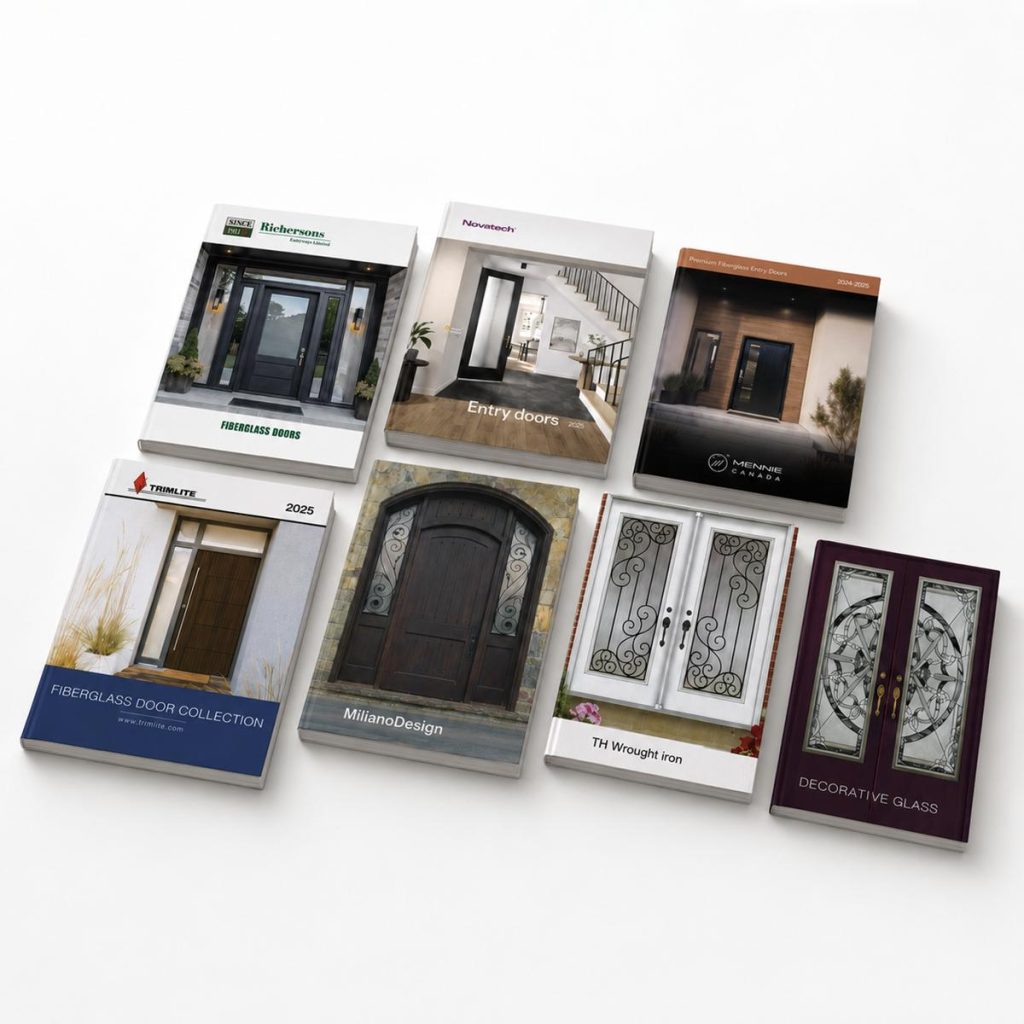
Brochures can help you compare front door styles, glass designs, colours, finishes, and hardware before speaking with a door specialist. They are especially useful if you are not sure whether you prefer fiberglass, steel, wood-look, modern, contemporary, or traditional designs.
View brochures:
Garage doors are large exterior doors used for vehicle access, storage, security, and convenience. In many Canadian homes, especially those with attached garages, they can also affect comfort, curb appeal, and the home’s overall thermal performance.
Because Garage Doors are usually the largest moving door system in a home, choosing the right type depends on space, opening style, insulation needs, safety features, and how the garage is used.

Understanding basic door parts can help you compare quotes, ask better questions, and understand what a contractor means by frame, jamb, threshold, hinges, weatherstripping, glass inserts, sidelights, or transoms.
Read more: Door Parts and Terminology
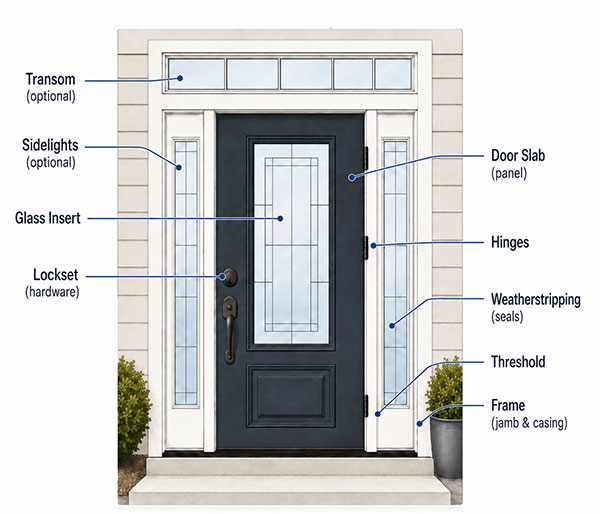
Door 101 is the main knowledge base section for learning about door types, materials, features, and related topics for Canadian homes and buildings.
The main groups include exterior doors, interior doors and partitions, patio doors, garage doors, and commercial doors. Each type has different materials, functions, performance features, and installation requirements.
A front door is one type of exterior door. Exterior doors can also include back doors, side doors, patio doors, storm doors, and other doors that connect indoor spaces with the outside.
Start with the door’s location and purpose. A front entrance, patio opening, interior room, garage, or commercial space will each require different materials, hardware, insulation, security, and installation considerations.
Windows & Doors Pro is a directory and knowledge base. The site helps visitors understand door options and find companies that provide door installation, replacement, repair, and related services.