
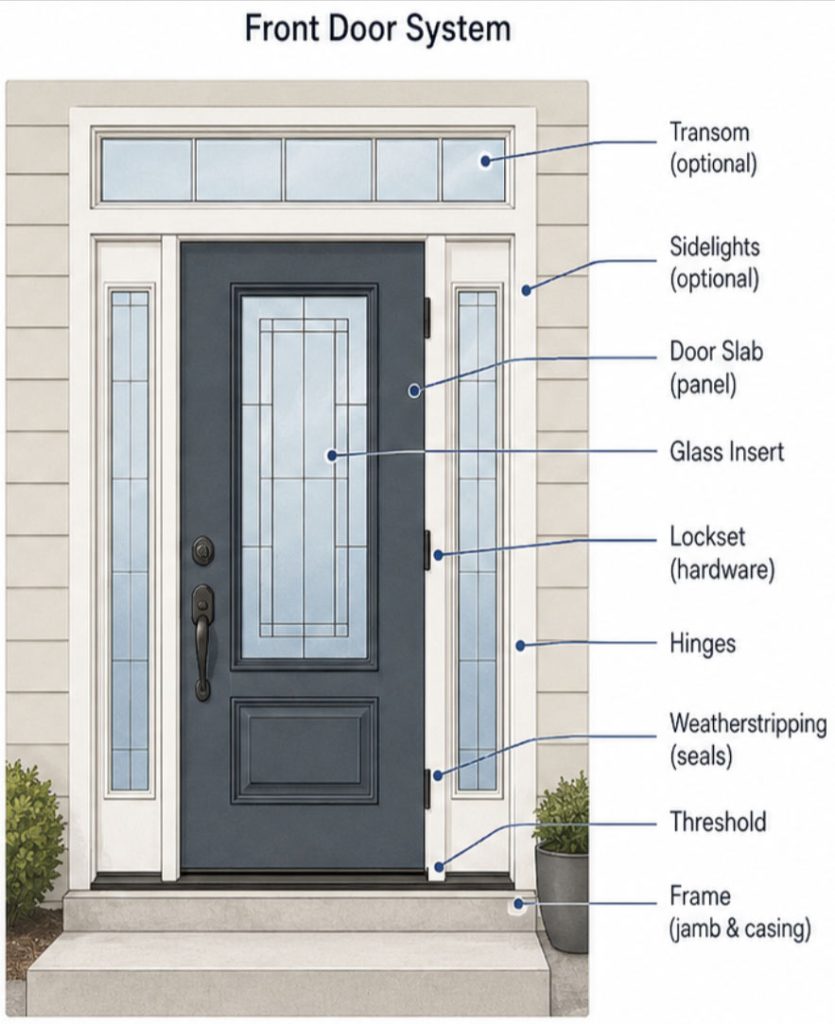
A front door, often called an entry door, is one of the most used parts of a home. You open it, close it, lock it, walk past it, and see it every day. Guests notice it before they step inside, and future buyers often form their first impression before the door is even opened.
But a front door is not just the visible panel. It works as a system: the door slab, frame, threshold, weatherstripping, hinges, lock hardware, glass inserts, and the installation around the opening all affect how the entrance performs.
If one part of the system fails, the door may look fine but still let in drafts, feel hard to close, reduce security, or perform poorly in Canadian weather. That is why a proper front door project should consider the entire entrance, not just the door panel.
When comparing quotes, ask whether the estimate includes only the door slab or the full door system, including the frame, sill, weatherstripping, and installation.
In everyday use, the term “front door” usually refers to the main door at the front of the home.
– Entry door is a broader term that can also include side or back exterior doors.
– Exterior door refers to any door that separates the inside of the home from the outside.
Front doors come in different configurations and styles. Some choices affect the size and layout of the entrance, while others affect light, privacy, security, and the home’s overall look.
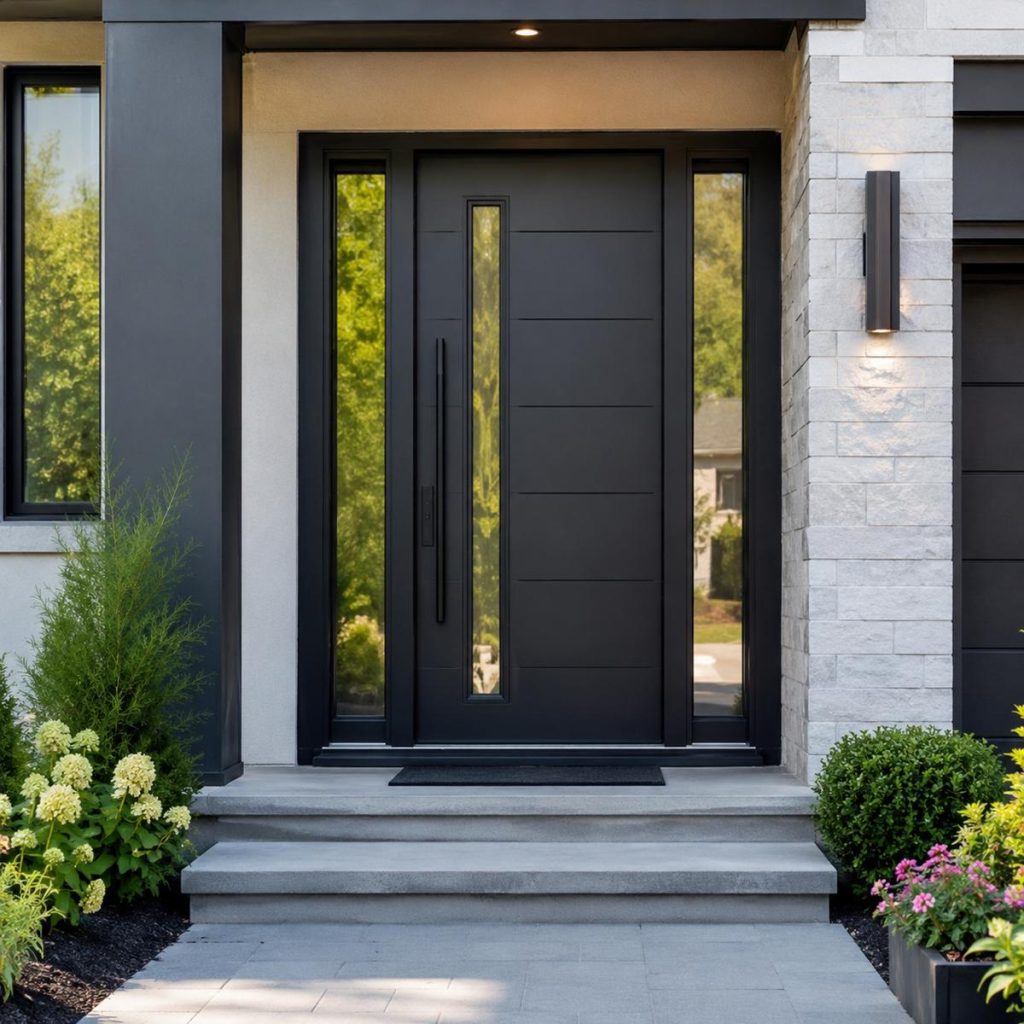
Modern front doors typically feature clean lines, simple panels, darker finishes, and larger glass areas. They work well with newer homes, renovated exteriors, and minimalist architectural styles.
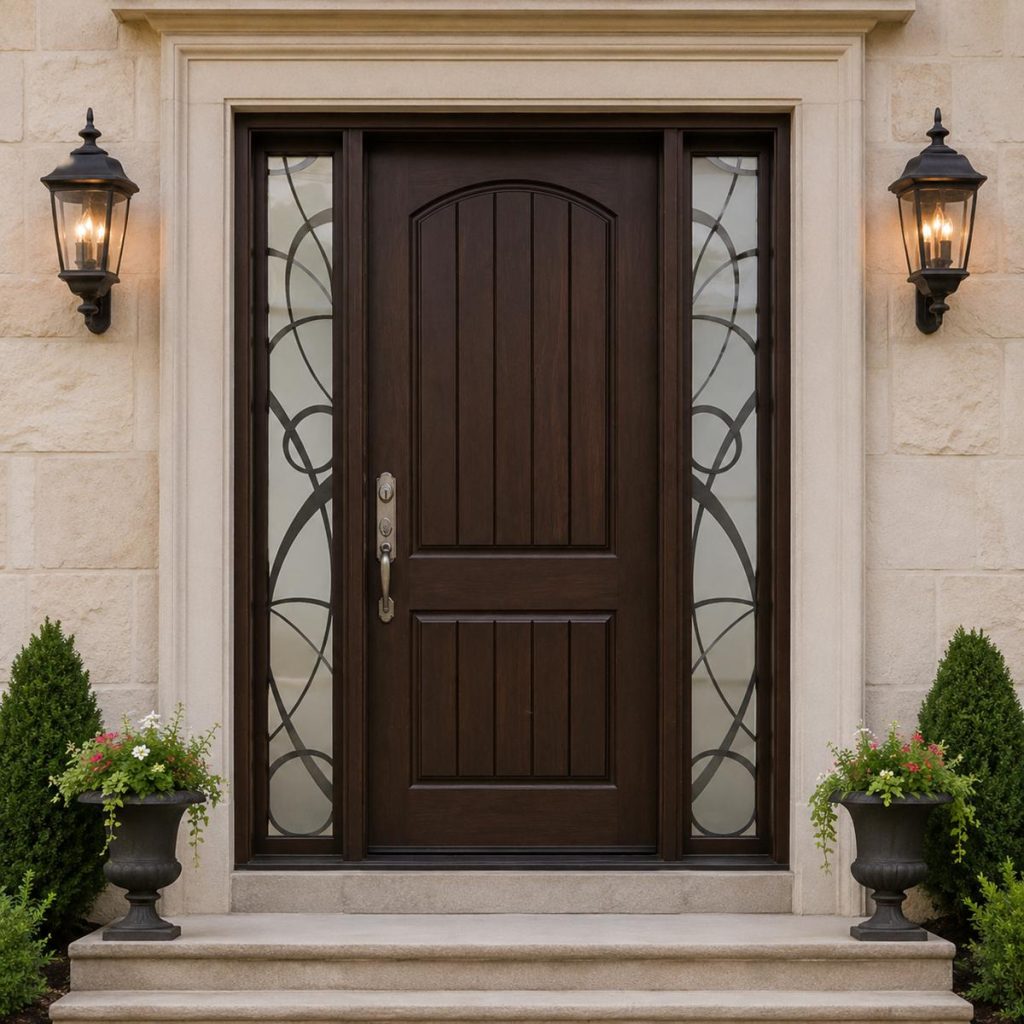
Traditional front doors often use raised panels, decorative glass, wood-look finishes, and classic hardware. They are common on older homes, formal entrances, and properties where a more timeless look is preferred.
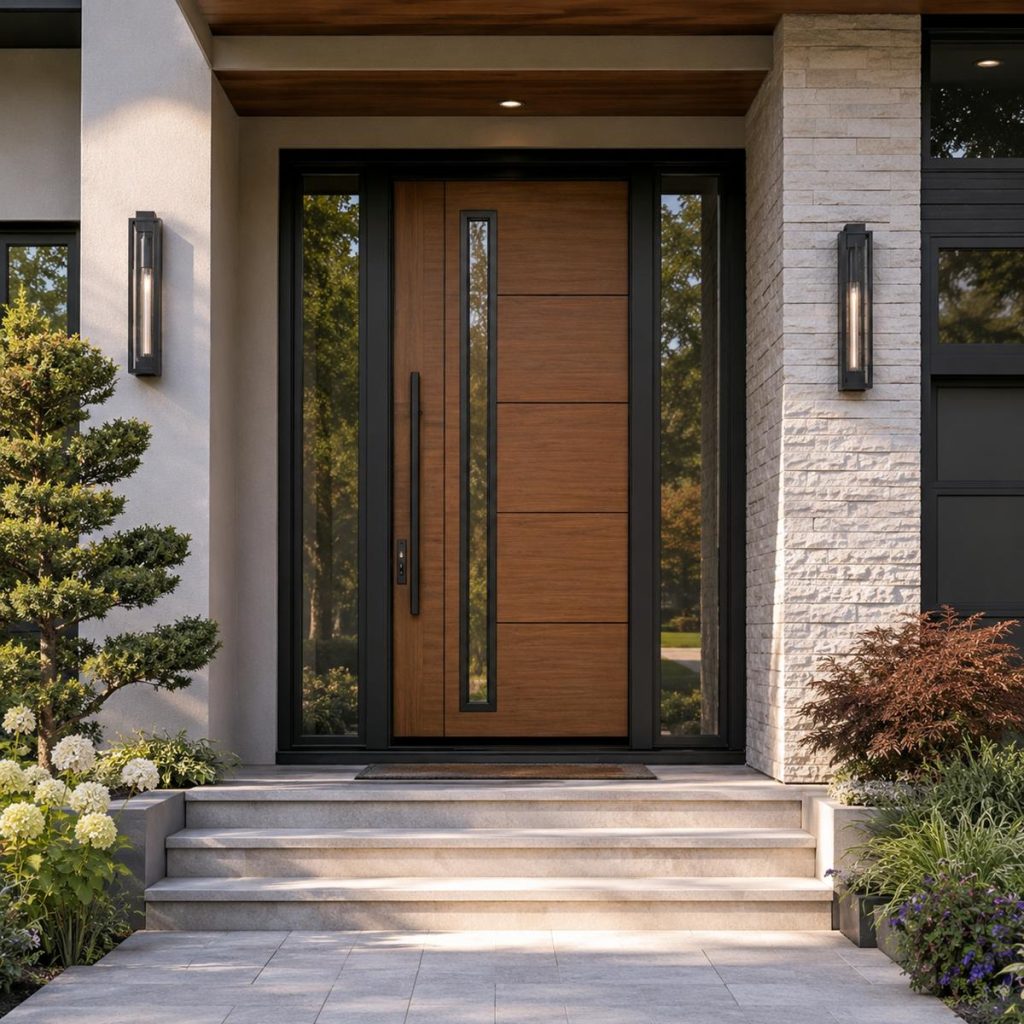
Contemporary front doors combine current design trends with more flexibility than strictly modern styles. They may include asymmetrical glass, textured finishes, warm neutral colours, or a mix of clean and decorative details.
The material of the entrance door affects durability, insulation, security, maintenance, appearance, and cost. In Canada, the right choice also depends on weather exposure, temperature changes, moisture, sun, and how much maintenance you are willing to do over time.
| Material | Best For | Main Advantages | Things to Consider |
|---|---|---|---|
| Fiberglass Front Doors | Most homeowners looking for a balance of durability, insulation, and design | Energy-efficient, low maintenance, durable, can look like wood | Usually costs more than basic steel |
| Steel Front Doors | Security, durability, practical replacement | Strong, affordable, good insulation, low maintenance | Can dent; damaged coating may lead to rust |
| Wood Front Doors | Premium, traditional, or custom homes | Natural appearance, rich texture, classic curb appeal | Higher maintenance; sensitive to moisture and sun |
| Vinyl / PVC Components | Frames, some exterior systems, patio-related applications | Moisture-resistant, low maintenance | Less common as the main front entry door slab |
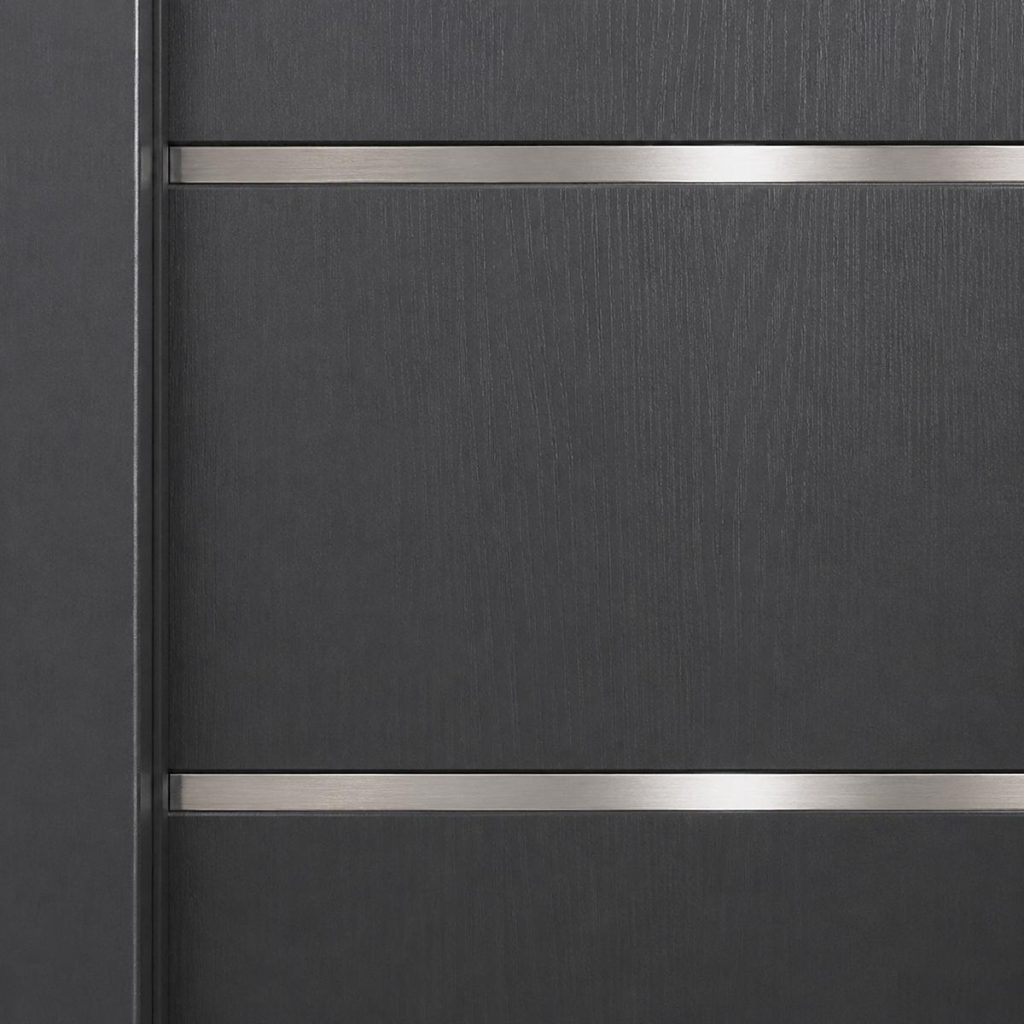
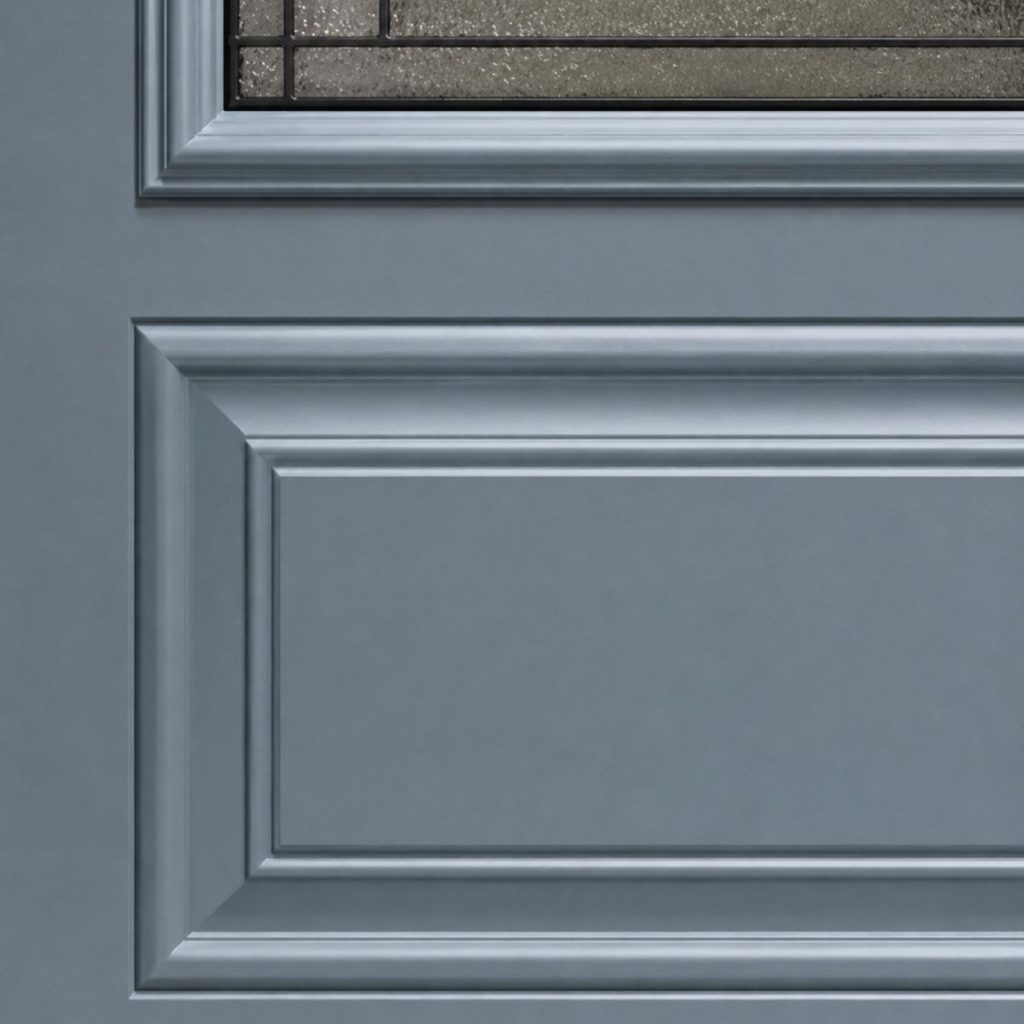
A practical option for security, strength, and value, especially for standard replacement projects.
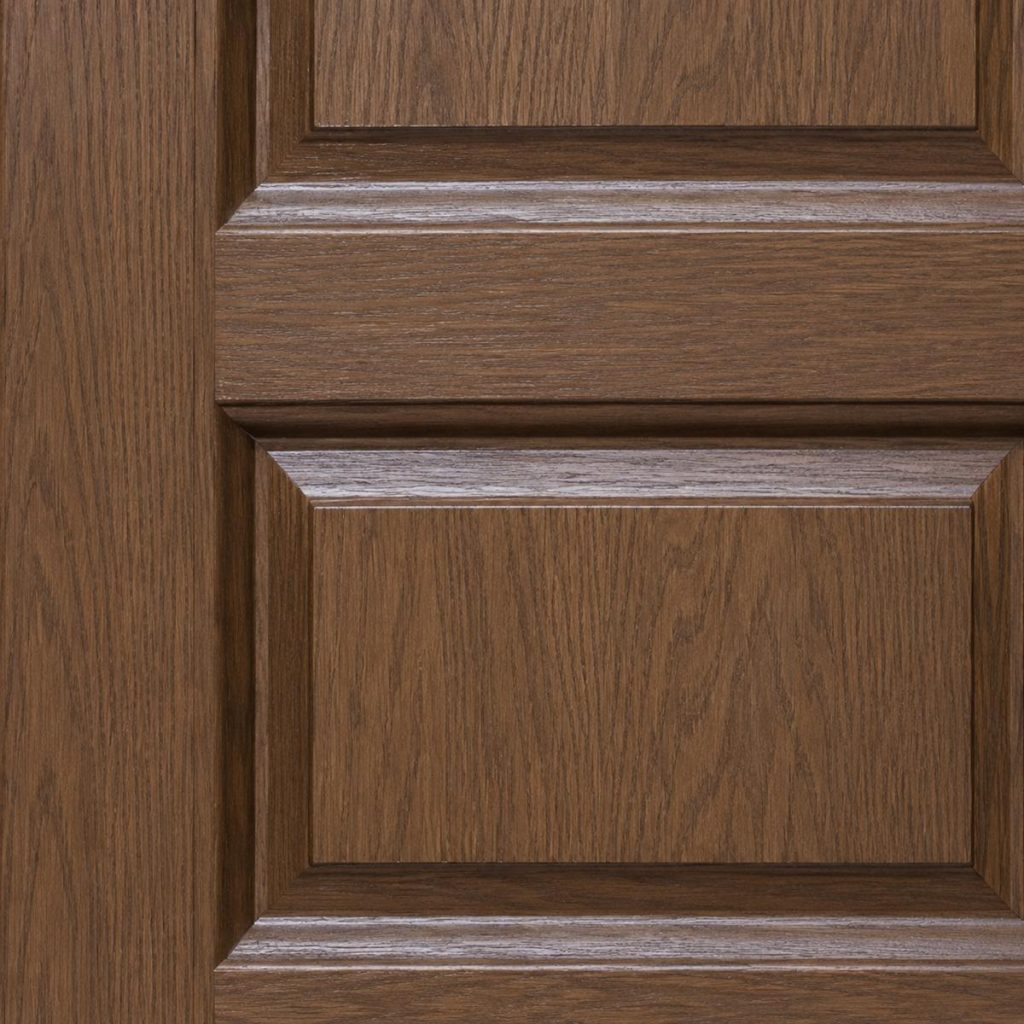
There is no single “best” entry door material for every home. Fiberglass is often the most balanced choice, steel is strong and practical, and wood is chosen mostly for its natural appearance and premium feel. The right material depends on climate exposure, budget, maintenance expectations, and the style of the home.
| If you want… | Consider |
|---|---|
| Low maintenance | Fiberglass |
| Better budget value | Steel |
| Natural premium look | Wood |
| Strong Canadian weather performance | Fiberglass or steel |
| Custom traditional appearance | Wood |
| Best balance of insulation and durability | Fiberglass |
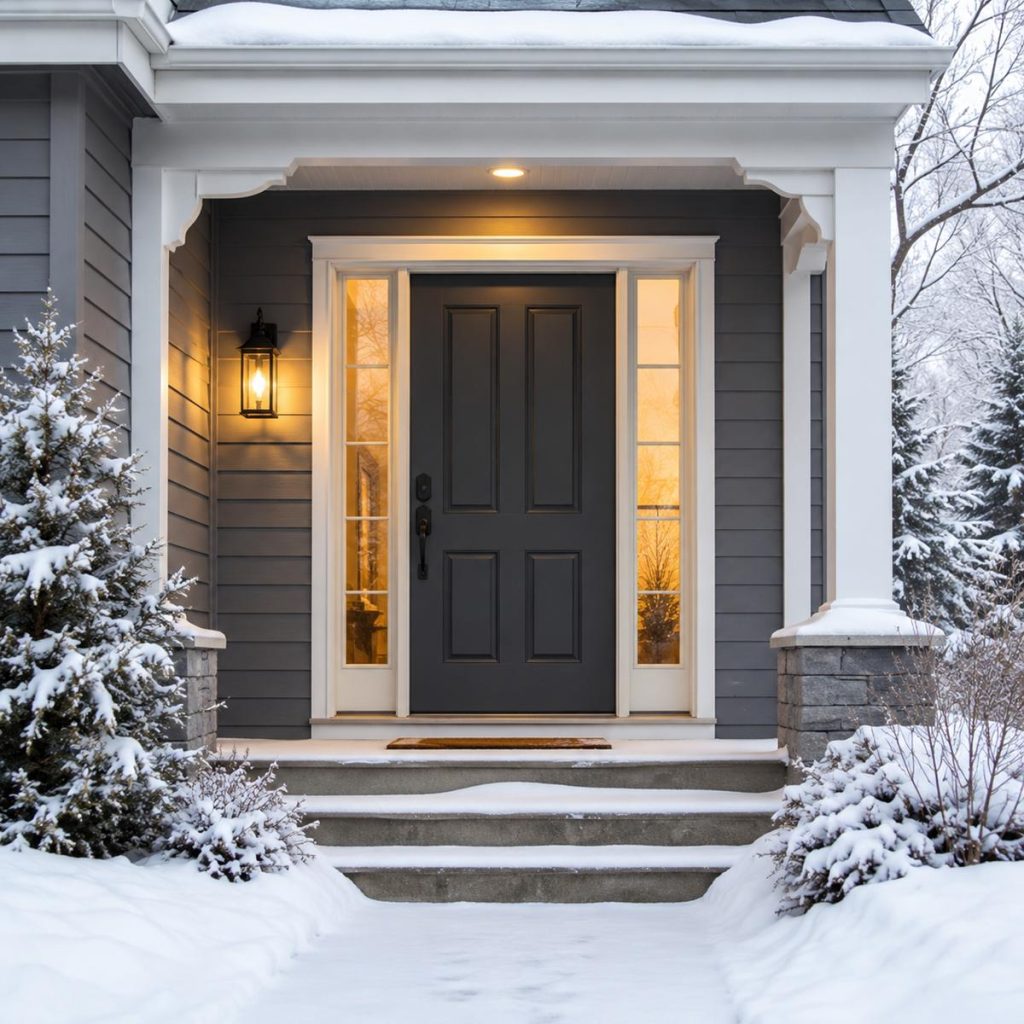
The entry door can affect comfort in both winter and summer, especially in Canadian homes. Material is important, but energy performance also depends on the insulated core, weatherstripping, threshold, glass package, and the door system’s seal.
If the door includes glass inserts, sidelights, or a transom, ask about Low-E glass, double- or triple-glazing, and proper sealing. These details help bring natural light into the entrance without creating unnecessary drafts or heat loss.
Some front doors or glass packages may be ENERGY STAR® certified, but always confirm certification for the specific product and your climate zone.
When reviewing a quote, ask whether it includes the full door system — door slab, frame, threshold, weatherstripping, glass package, and insulation around the opening. Even a quality door can perform poorly if it is not properly sealed and installed.
Related guide: Front Door Installation and Replacement Cost in Canada
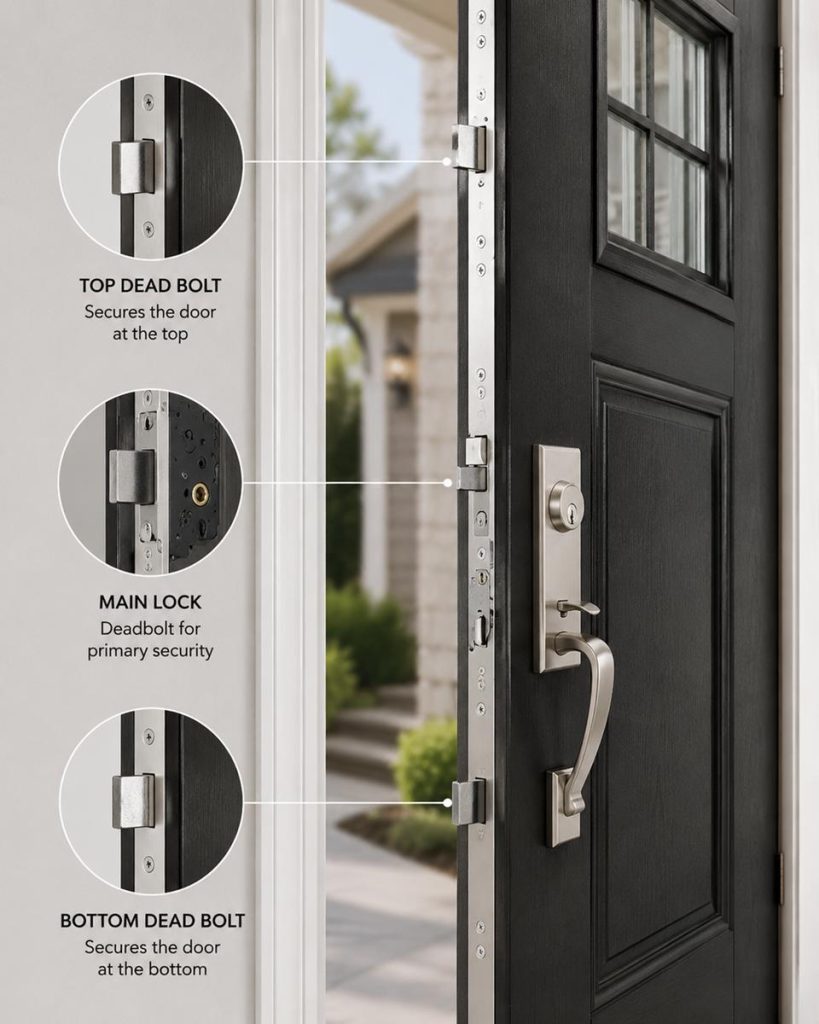
Security is one of the main reasons homeowners pay close attention to front doors. The door slab matters, but real security depends on the full system: the door material, frame strength, lock hardware, hinges, glass, and installation quality.
A secure front door should close firmly, lock properly, and sit tightly in the frame. Weak frames, poor alignment, worn hardware, or large gaps around the door can reduce security even if the door itself is made from a strong material.
For better protection, homeowners can ask about reinforced frames, quality deadbolts, multi-point locking systems, strong hinges, laminated or tempered glass, and professional installation. If the door has glass inserts or sidelights, the type of glass and its placem
Do not judge front door security by the door slab alone. Ask the door company about the lock, frame, hinges, glass, and installation method. A strong door can still be vulnerable if the surrounding system is weak.
Related guide: Front Door Security Guide
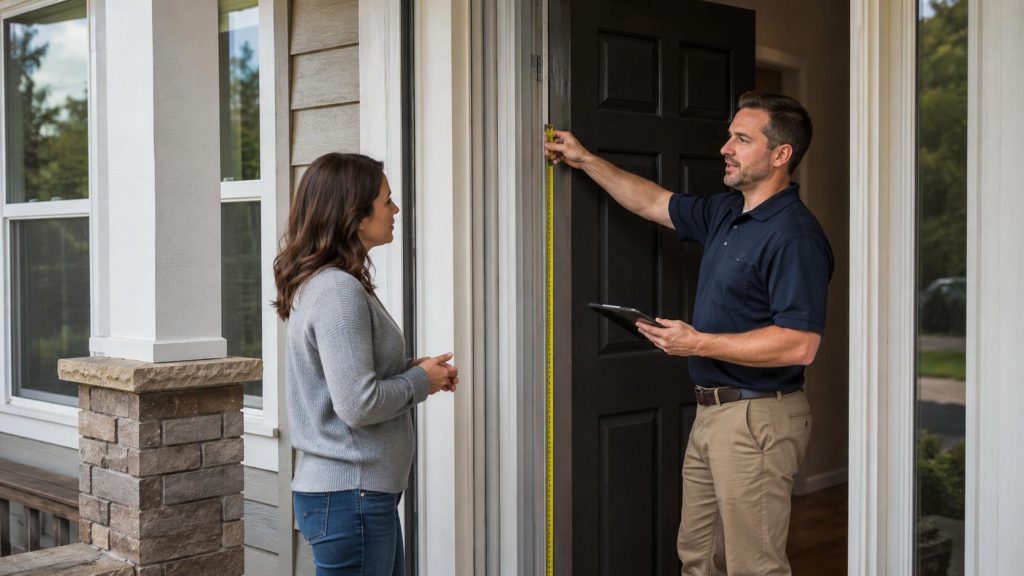
Choosing the right front door is only part of the project. The company you hire should be able to explain materials, glass options, security features, energy performance, installation method, warranty, and the total scope of work.
Before contacting a contractor, compare several local companies, check their service areas, read reviews, and ask whether they specialize in front door repair, replacement, or full door system installation.
Find local help: Browse front door companies in your area.
A front door should match the home, but appearance is only one part of the decision. Material, insulation, glass, hardware, and installation also matter.
A new door slab may not fix drafts, leaks, or poor closing if the frame, sill, or weatherstripping is worn, damaged, or poorly sealed.
The lowest price may not include framework, glass options, hardware, finishing, insulation, disposal, warranty, or proper professional installation.
Glass inserts, sidelights, and transoms can look great, but too much clear glass may reduce privacy, security, and energy performance.
In Canadian weather, ask about insulated cores, Low-E glass, weatherstripping, threshold sealing, and ENERGY STAR® certification where available.
Even a quality front door can perform poorly if it is not measured, aligned, sealed, insulated, and installed correctly.
Before making a decision, ask each company to explain what is included: door slab, frame, threshold, glass, hardware, warranty, and installation.
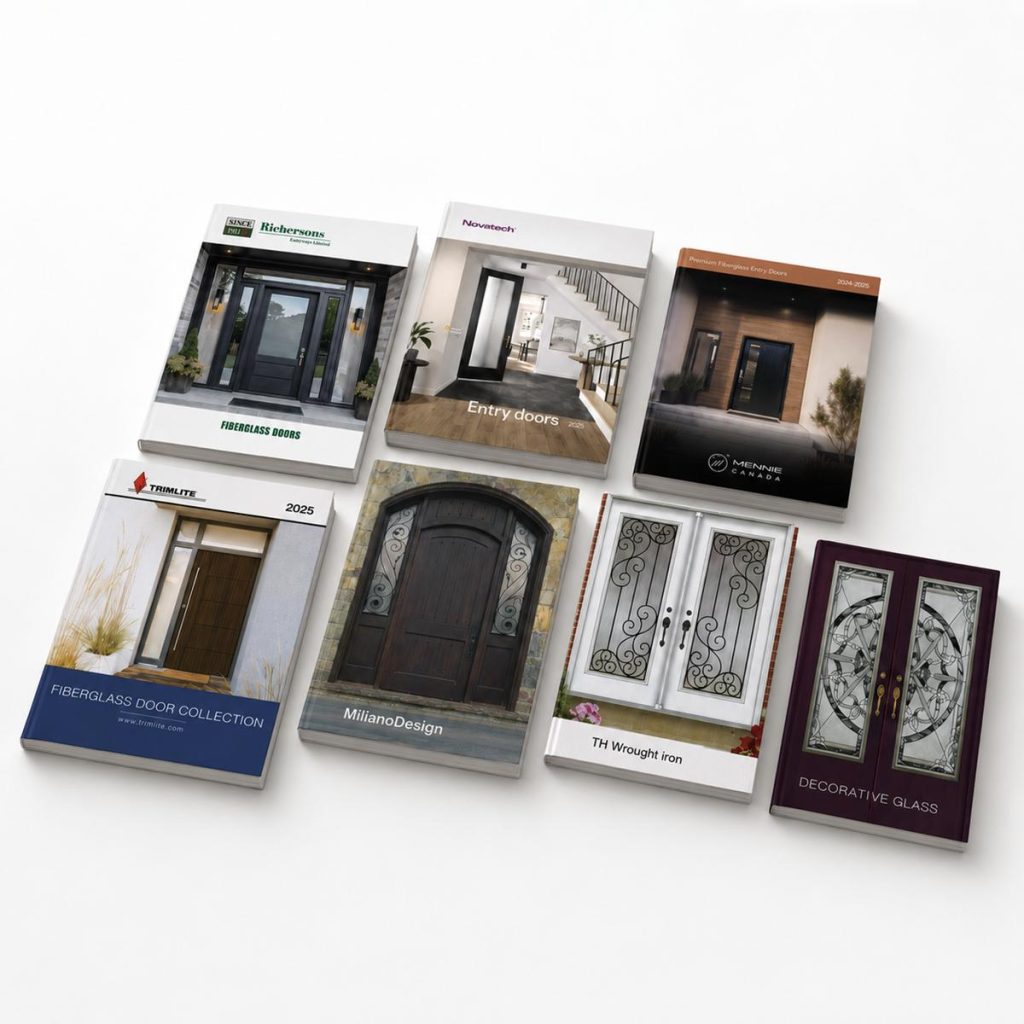
Brochures can help you compare front door styles, glass designs, colours, finishes, and hardware before speaking with a door specialist. They are especially useful if you are not sure whether you prefer fiberglass, steel, wood-look, modern, contemporary, or traditional designs.
View brochures:
Compare door companies in your area, review their services, and contact a qualified specialist for inspection, repair, or replacement.