
Home » Garage Doors 101 » Tilt-Up Garage Doors
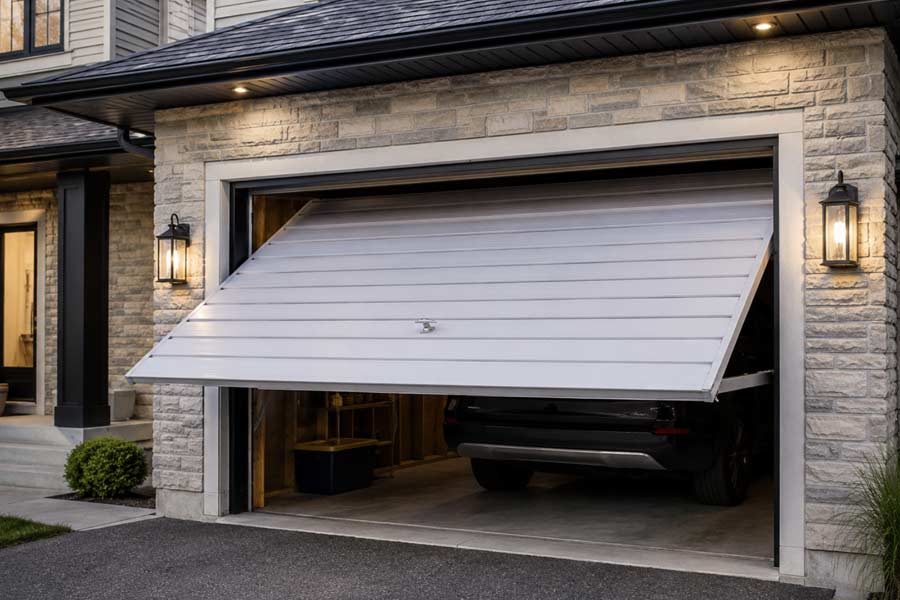
Tilt-up garage doors—also known as up-and-over doors—have been a staple in Canadian residential construction for decades. Characterized by a one-piece panel that tilts upward and outward before sliding into the garage ceiling, these doors offer a clean appearance and straightforward functionality.
While less common in new builds today, tilt-up doors are still widely used and preferred for their cost-effectiveness, minimal maintenance, and compatibility with traditional garages. In this guide, we explore the mechanics, benefits, installation process, and ideal use cases for tilt-up garage doors across Canada.
A tilt-up garage door consists of a single solid panel that pivots outward and upward on a hinge mechanism, then slides into a horizontal position under the garage ceiling. Unlike sectional doors made of multiple hinged panels, tilt-up doors operate as one rigid piece.
There are two primary types:
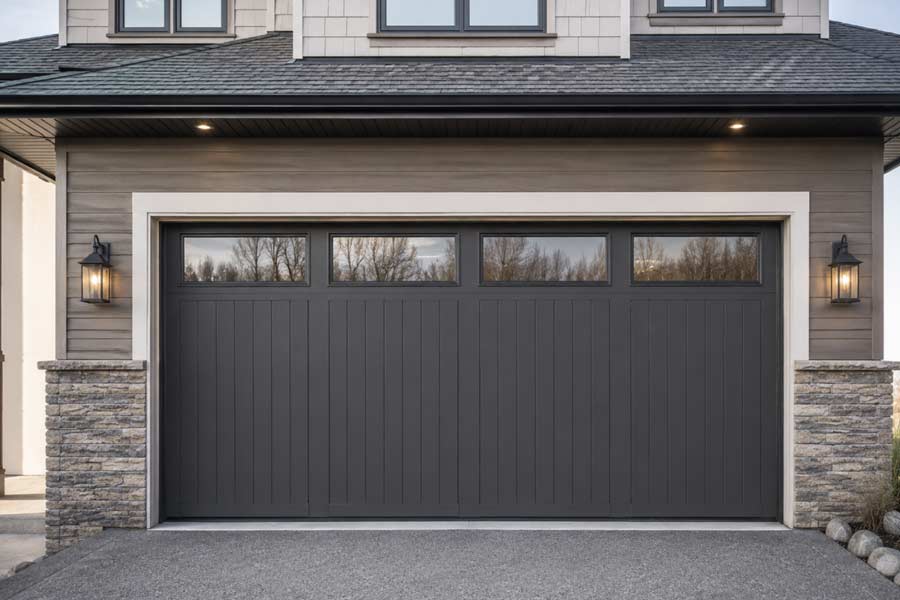
Tilt-up doors can be made from wood, steel, or fiberglass and may include windows or decorative paneling.
Though they’ve been somewhat overshadowed by sectional models, tilt-up garage doors offer several distinct advantages:
Space Efficient Inside the Garage – The door lifts overhead without taking up side wall space.
Tilt-up garage doors are well suited for:
DIY Installations – The simpler mechanism appeals to experienced homeowners.
Tilt-up garage doors tend to be more affordable than modern sectional or roll-up doors. Here’s an approximate cost range:
| Feature | Price Range (CAD) |
|---|---|
| Basic Wood or Steel Canopy Door | $1,000 – $2,000 |
| Insulated or Decorated Panel | $2,000 – $3,500+ |
| Motorized Opener (Optional) | $500 – $1,000 |
| Installation Cost | $400 – $900 |
Customizations such as decorative trim, hardware, or glass inserts will increase the total price.
Installing a tilt-up garage door is typically faster and simpler than other types. Here’s what the process looks like:
A technician visits your property to assess the garage dimensions, ceiling clearance, and structural compatibility for tilt-up operation.
You choose a material (wood, steel, or fiberglass), insulation level, and design. Canopy vs. retractable style is also decided based on space and personal preference.
Standard doors may be delivered within days. Custom models can take 2–4 weeks depending on design complexity.
The existing door (if any) is removed. Technicians install the pivot arms, spring system, and overhead guides. The tilt-up panel is aligned and tested for smooth operation. If automation is requested, a swing-arm motor is mounted and synced.
The door is tested for balance, seal performance, and opener response. Installers will walk you through usage, safety tips, and warranty information.
Tilt-up doors are durable but require regular inspection due to the stress placed on hinge mechanisms and springs:
With consistent upkeep, a tilt-up garage door can last 20–25 years.
Tilt-up garage doors remain a reliable and cost-effective solution for many Canadian homes. Their simple operation, timeless look, and ease of repair make them a smart choice for homeowners seeking practicality over complexity.
Whether you’re replacing an aging model or looking for a traditional design that works, a tilt-up garage door could be exactly what you need.