
Doors Knowledge Base
Learn about the main types of garage doors available for Canadian homes — from sectional and roll-up doors to side-hinged, slide-to-the-side, and tilt-up designs. Compare their features, materials, insulation options, and space requirements to find the right solution for your garage.
Garage doors are an important part of a home’s exterior, influencing everyday convenience, security, energy efficiency, and curb appeal. With several opening styles, materials, insulation levels, and design options available, understanding the differences can make choosing the right door much easier.
This Garage Doors 101 guide covers the essential information homeowners should know before selecting or replacing a garage door, including the main door types, how each system operates, and which factors matter most for different garage layouts and uses.
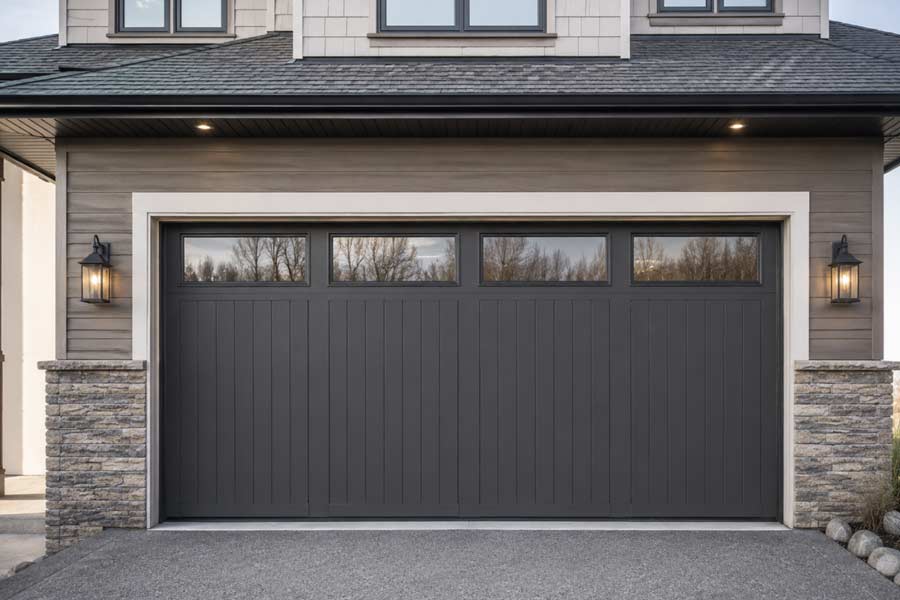
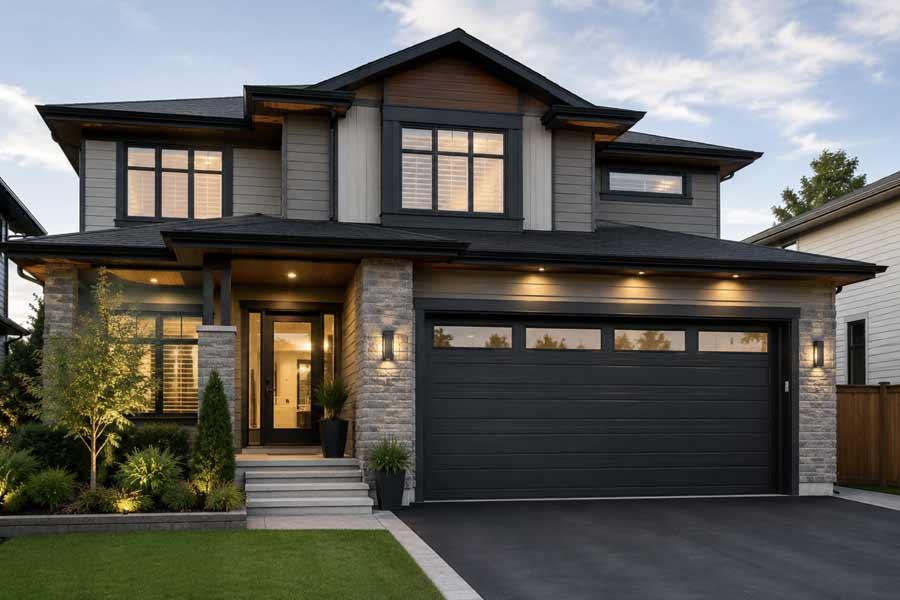
The most common residential garage door type in Canada. Sectional doors are made of horizontal panels that move upward and slide along ceiling tracks.

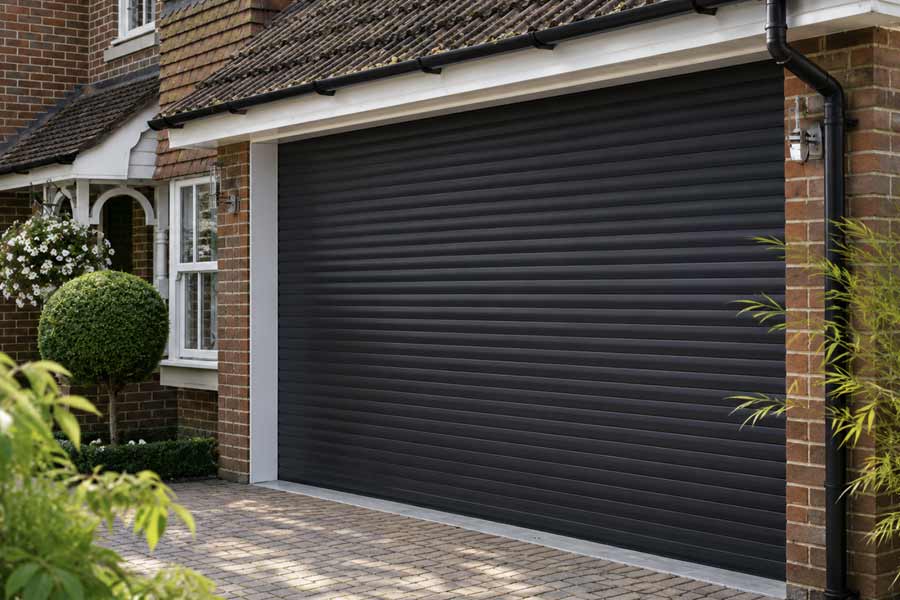
Roll-up doors are made of narrow horizontal slats that coil above the opening. They are more common in commercial, industrial, and compact spaces.

Side-hinged doors swing open like traditional doors. They can work well for garages used as workshops, storage areas, or utility spaces.
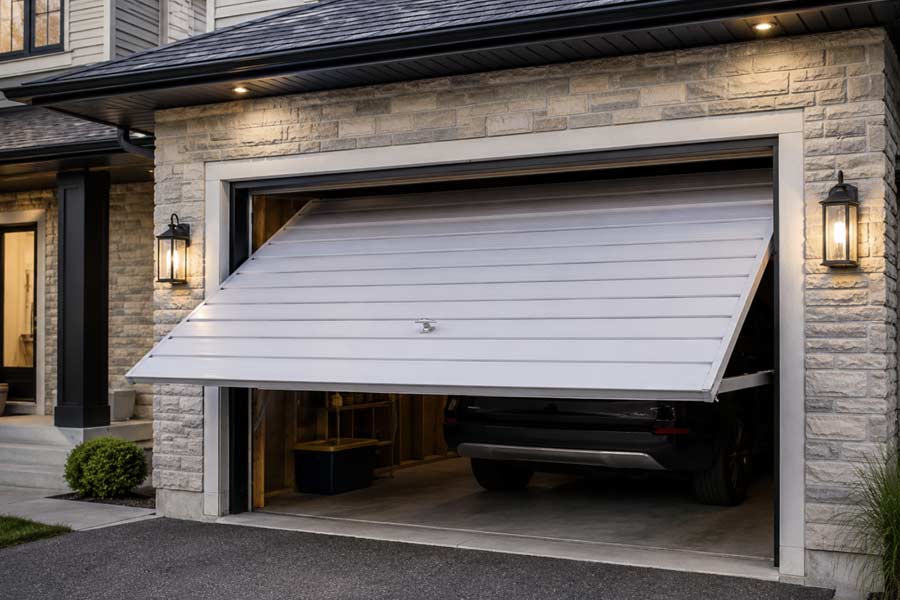
Tilt-up doors are single-panel doors that lift upward as one piece. They are less common today because they require more clearance and may have more space limitations.
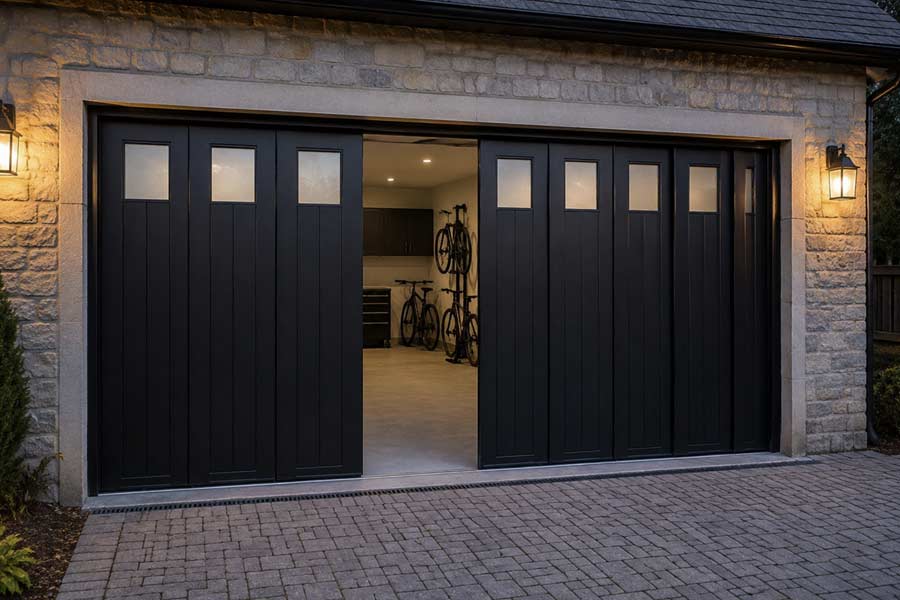
These doors slide horizontally along the garage wall instead of opening upward. They work well in garages with low ceilings, exposed pipes, or overhead storage.
| Material | Features & Benefits |
|---|---|
| Steel | Strong, low-maintenance, and widely used for residential garage doors. Available in insulated versions and many styles, colours, and panel designs. |
| Aluminium | Lightweight, corrosion-resistant, and often used for modern garage door designs. Works well for wide openings and glass-panel systems. |
| Wood | Offers a warm, high-end appearance and can be customized, but usually requires regular maintenance to resist moisture and weather damage. |
| Composite | Designed to combine the look of wood with better durability and lower maintenance. Often used as an alternative to real wood garage doors. |
| Glass & Aluminum | Popular in contemporary homes and some commercial spaces. Provides a modern look, but insulation, privacy, and climate should be considered. |

Insulation is important in colder regions of Canada, especially for attached garages or garages used as workshops, storage, or utility spaces. Look for insulated door options and proper sealing around the opening.
In areas with stronger winds or exposed locations, ask about wind-rated garage doors, reinforced tracks, and hardware designed for added structural support.
Garage door security depends on the door, tracks, opener, remote access, and locking system. Reinforced hardware, rolling-code openers, and smart access controls can improve protection.
Modern garage door openers can connect to home automation systems and allow remote access, alerts, scheduling, and monitoring from a phone.
All automatic doors in Canada must include safety sensors to prevent closing on people or objects, along with auto-reverse functions.
Choosing the right garage door involves more than selecting a material or design. Consider how the garage is used, the available ceiling and wall space, insulation needs, maintenance requirements, and the style of the home.
Comparing these factors can help you choose a door that provides the right balance of everyday convenience, durability, energy efficiency, and curb appeal.
Attached garages, workshops, and frequently used spaces may benefit from better insulation, weather sealing, and quieter operation.
Sectional doors require overhead space, slide-to-the-side doors need a clear interior wall, and side-hinged doors require exterior clearance.
Insulated doors can improve comfort in attached or heated garages, especially when living space is located above or beside the garage.
Steel is durable and low-maintenance, aluminium suits modern designs, wood offers a premium look, and composite combines a wood-like appearance with easier upkeep.
Choose a panel design, colour, windows, and finish that complement the home’s architectural style and exterior.
Compare durability, maintenance, insulation, weather resistance, and hardware quality—not only appearance and initial cost.
Sectional garage doors are the most common choice for Canadian homes. They are made of connected horizontal panels that move upward along tracks and rest beneath the garage ceiling when open. They are available in many materials, styles, and insulated configurations.
Steel is one of the most widely used and durable materials for residential garage doors. It offers good strength, requires relatively little maintenance, and is available with different insulation levels and protective finishes. However, long-term performance also depends on material quality, hardware, installation, climate exposure, and regular maintenance.
The best option depends on where space is limited. Roll-up doors require relatively little ceiling space because the slats coil above the opening, while slide-to-the-side doors keep the ceiling clear but require an unobstructed interior wall. A professional assessment can help determine which system is suitable for the garage layout.
A well-maintained garage door can often remain in service for 15 to 30 years. Its lifespan depends on the material, construction quality, frequency of use, local weather conditions, installation, and maintenance. Springs, rollers, cables, seals, and garage door openers may require repair or replacement sooner than the door itself.
Yes. A domain can be used for an existing window and door company, a new regional website, a separate service brand or expansion into another market.
Professional installation is generally recommended because garage doors are large, heavy systems with tracks, cables, springs, and safety components that must be properly aligned and adjusted. Correct installation supports safe operation, reliable performance, proper sealing, and compliance with manufacturer requirements.