
This guide explains the main types of patio doors, available materials and glass options, important security features, standard sizes, and the key factors to consider before choosing a new patio door.
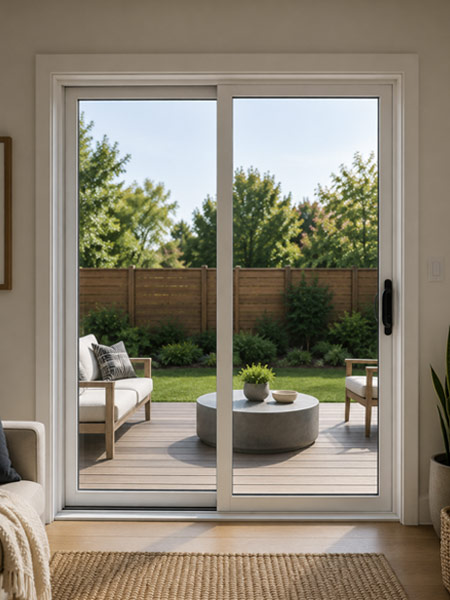
Patio doors are exterior doors designed to provide convenient access between the home and an outdoor area such as a backyard, deck, balcony, or garden. Unlike standard entry doors, they usually feature large glass panels that allow more natural light into the room and create a stronger visual connection with the outdoors.
Depending on the design, patio doors may slide along a track, swing open on hinges, or fold to one side. Each configuration offers different benefits in terms of space, ventilation, opening width, and architectural style.
Modern patio doors are also designed to improve more than access. With insulated glass, durable frames, weather-resistant seals, and secure locking systems, they can contribute to better comfort, energy efficiency, and home security throughout the year.
Replacing an older patio door can improve far more than the appearance of your home. Today’s patio doors are designed to maximize daylight, reduce energy loss, enhance security, and create a more comfortable connection between indoor and outdoor living spaces.
Patio doors are available in several configurations, each designed to suit different home layouts, architectural styles, and lifestyle needs. Some prioritize saving space, while others create a dramatic opening between indoor and outdoor living areas. Understanding the differences can help you choose the option that best fits your home.
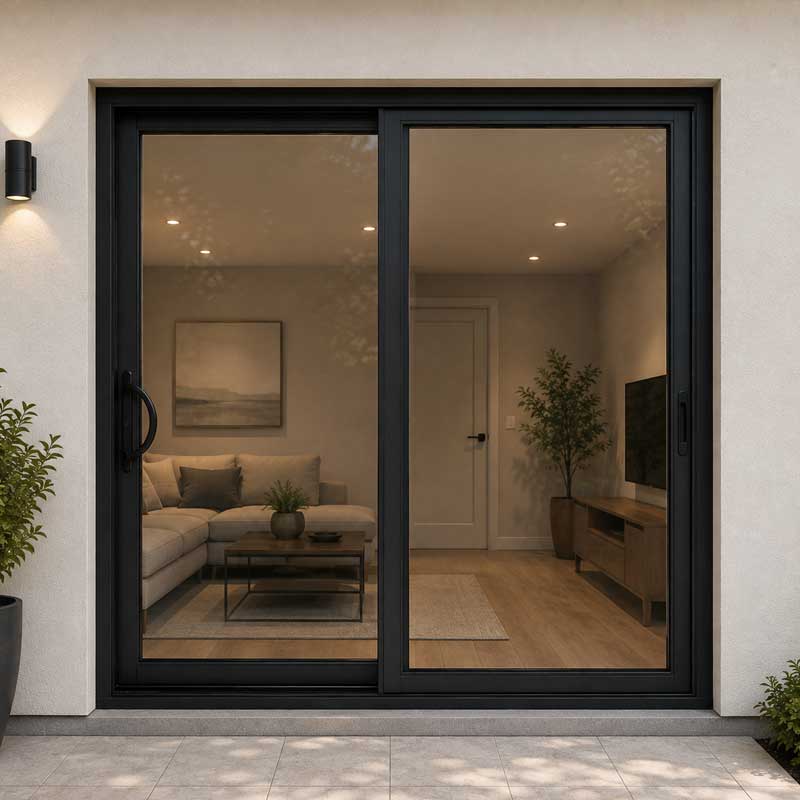
Sliding patio doors feature one or more panels that glide horizontally along a track. Because they don’t require extra floor space to open, they’re an excellent choice for smaller patios, decks, balconies, and modern homes. Their large glass panels maximize natural light while providing smooth, convenient everyday operation.
Best for: Space-saving designs, contemporary homes, and everyday convenience.
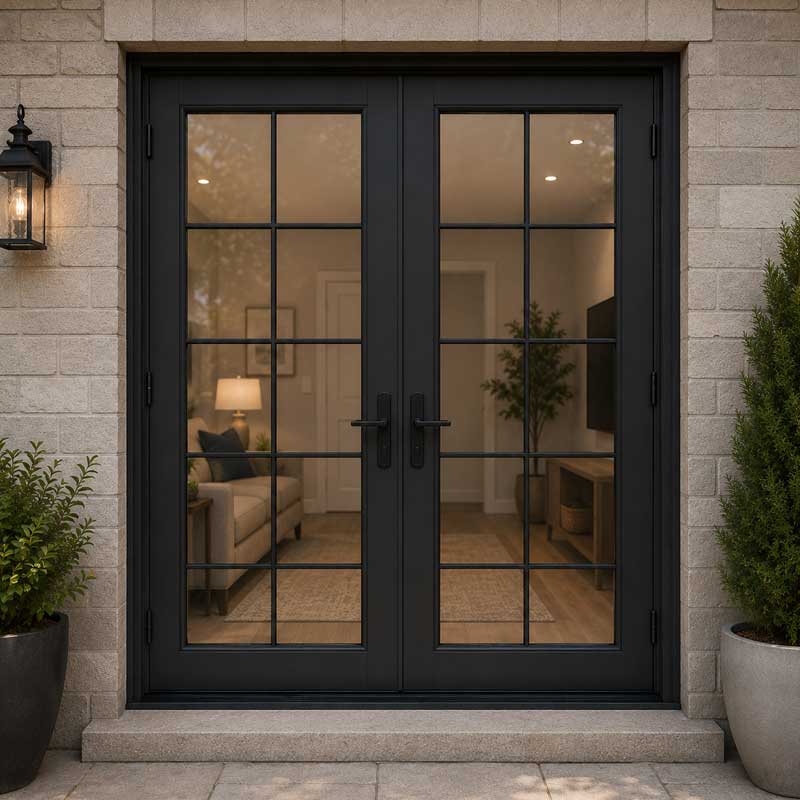
French patio doors consist of two hinged panels that swing inward or outward, creating a wide and elegant entrance. Their classic appearance makes them a popular choice for traditional, transitional, and luxury homes where architectural style is just as important as functionality.
Best for: Traditional architecture, wide openings, and timeless curb appeal.
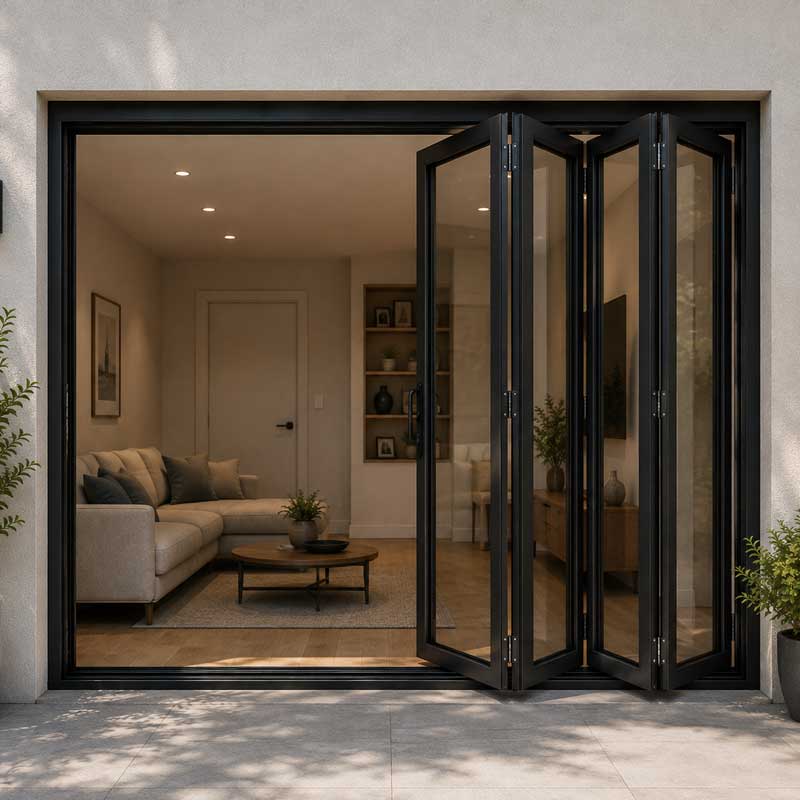
Also known as bi-fold doors, folding glass doors feature multiple panels that fold and stack neatly to one or both sides. When fully opened, they create an expansive opening that seamlessly connects indoor and outdoor spaces, making them a popular choice for modern custom homes.
Best for: Large openings, panoramic views, and open-concept living.
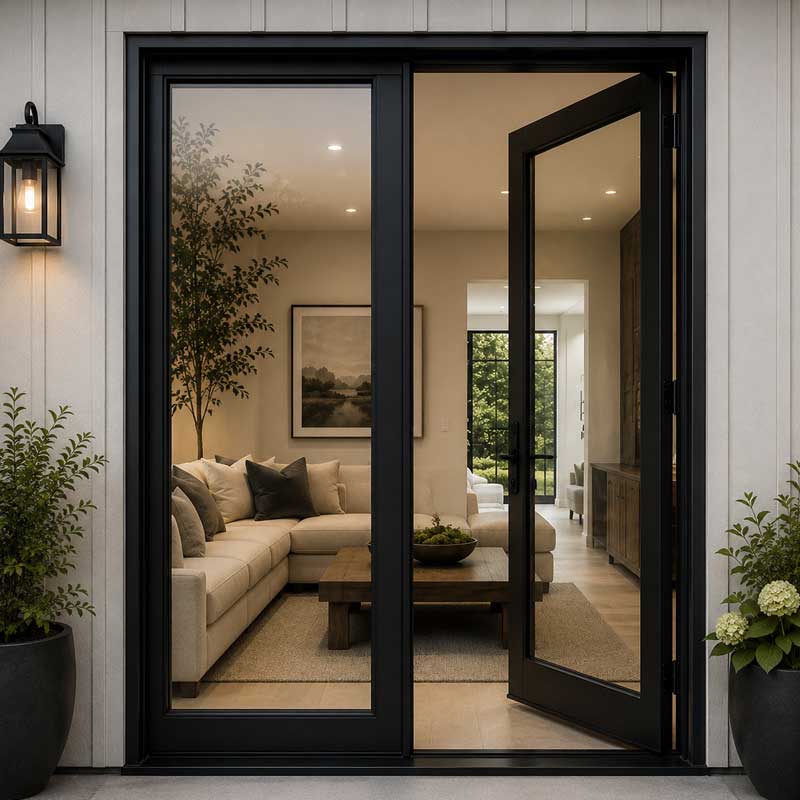
Garden doors are a practical variation of French doors commonly found in Canadian homes. They typically include one active swinging panel and one fixed panel, offering the elegant appearance of French doors while requiring less space and simpler hardware.
Best for: Homes that want the look of French doors with a more practical everyday design.
The frame material plays a major role in how a patio door performs over time. It affects energy efficiency, durability, maintenance requirements, appearance, and overall cost. Each material offers unique advantages, making certain options better suited to specific climates, budgets, and architectural styles.
| Material | Best For | Main Advantages | Things to Consider |
|---|---|---|---|
| Vinyl Patio Doors | Homeowners looking for an affordable, energy-efficient, and low-maintenance solution | Excellent insulation, moisture-resistant, never needs painting, budget-friendly | Frames are generally thicker than aluminum and offer fewer ultra-slim design options |
| Fiberglass Patio Doors | Premium homes seeking durability, energy efficiency, and long-term performance | Extremely durable, low maintenance, excellent insulation, can replicate real wood | Higher upfront cost than vinyl |
| Aluminum Patio Doors | Modern homes with large glass walls and contemporary architecture | Slim frames, exceptional strength, supports oversized glass panels, corrosion-resistant | Lower insulation than vinyl or fiberglass unless equipped with a thermal break |
| Wood Patio Doors | Luxury, custom, and traditional homes | Natural beauty, warm appearance, can be refinished or painted, timeless style | Requires regular maintenance and protection from moisture and weather |
Not sure which material is right for your home? Consider your local climate, maintenance expectations, budget, and the architectural style of your property. While vinyl and fiberglass are the most popular choices for Canadian homeowners, aluminum and wood remain excellent options for specific applications and design preferences.
Sliding doors require virtually no clearance, while French and garden doors need room for the panels to swing open. Folding doors require space where the stacked panels will rest when fully opened.
For Canadian winters, look for insulated frames, quality weatherstripping, Low-E glass, and ENERGY STAR® certified products to maximize comfort and reduce energy loss.
Vinyl offers affordability and low maintenance, fiberglass provides premium performance, aluminum suits modern designs, and wood delivers timeless natural beauty.
Larger glass panels create brighter interiors and better outdoor views, while decorative or privacy glass offers additional privacy without sacrificing daylight.
Look for multi-point locking systems, reinforced frames, tempered or laminated safety glass, and high-quality hardware for greater peace of mind.
Choose a door style that complements your home's design—sliding doors for contemporary homes, French or garden doors for traditional architecture, and folding doors for modern open-concept living.
Modern patio doors are designed with security in mind. Advances in frame construction, locking mechanisms, and safety glazing have made today’s patio doors significantly more secure than older models. Choosing the right security features can help protect your home without sacrificing natural light or ease of operation.
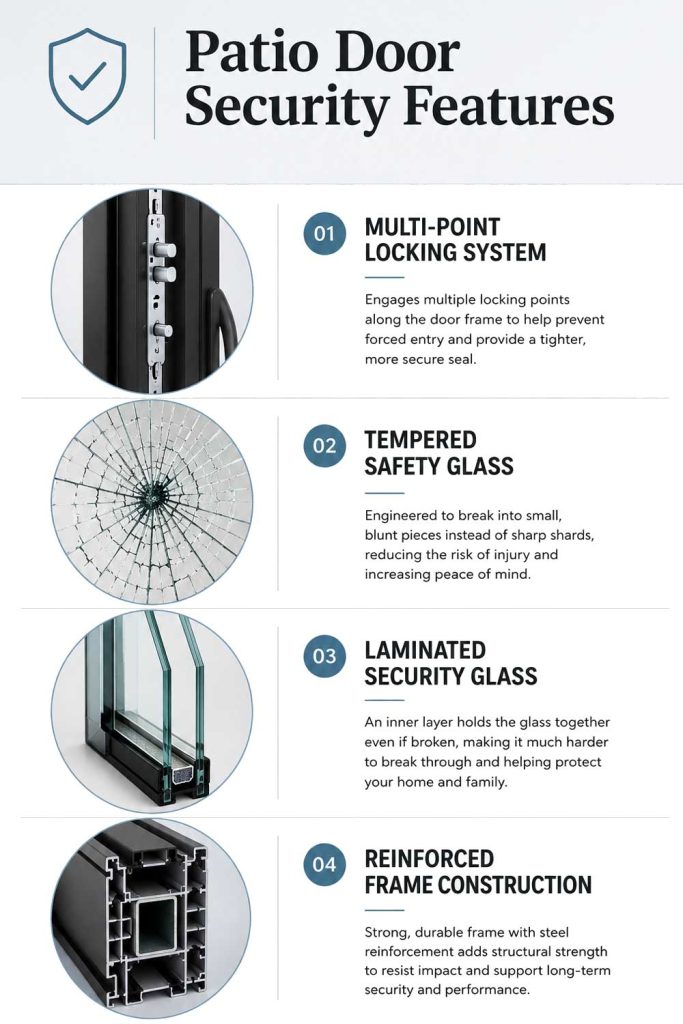
Unlike traditional single-point locks, multi-point locking systems secure the door at several locations along the frame. This creates a tighter seal, makes forced entry more difficult, and helps improve the overall stability of the door.
Tempered glass is several times stronger than standard glass and is designed to break into small, blunt pieces rather than sharp shards. It improves occupant safety and is commonly required by building codes for patio doors.
Laminated glass contains a durable interlayer that holds the glass together even if it breaks. This makes it more resistant to forced entry while also helping reduce outside noise and blocking more UV rays.
A strong frame provides the foundation for a secure patio door system. Reinforced vinyl, fiberglass, aluminum, and engineered wood frames help resist twisting, warping, and impact over years of daily use.
Rollers, hinges, handles, and locking components all contribute to the long-term security and smooth operation of a patio door. Premium hardware is built to withstand frequent use while maintaining reliable performance.
Even the most secure patio door can become vulnerable if it is installed incorrectly. Professional installation ensures the frame is properly anchored, aligned, and sealed, allowing all security features to function as intended.
Patio doors are available in a range of standard sizes to fit most residential openings. While custom dimensions are available for unique projects, standard sizes are typically more affordable, easier to source, and faster to install.
The exact dimensions vary by manufacturer, door style, and the number of panels, but the following sizes are commonly available in Canada.
| Patio Door Type | Common Widths | Common Heights |
|---|---|---|
| Sliding Patio Doors | 5 ft (60"), 6 ft (72"), 8 ft (96"), 9 ft (108"), 12 ft (144") | 6'8" (80"), 8 ft (96") |
| French Patio Doors | 5 ft (60"), 6 ft (72") | 6'8" (80"), 8 ft (96") |
| Garden Doors | 5 ft (60"), 6 ft (72") | 6'8" (80"), 8 ft (96") |
| Folding Glass Doors | Custom configurations from 8 ft to over 20 ft wide | 6'8" (80"), 8 ft (96"), custom heights |
For most homeowners, standard-sized patio doors offer the best value. They are typically more affordable, have shorter lead times, and simplify installation.
Custom patio doors are ideal when replacing a non-standard opening, designing a custom home, or creating large glass walls with multiple panels. Although they provide greater design flexibility, they usually involve higher manufacturing costs and longer production times.
Compare door companies in your area, review their services, and contact a qualified specialist for inspection, repair, or replacement.
There is no single best option for every home. Sliding patio doors are ideal for saving space, French and garden doors offer a more traditional appearance, while folding glass doors create the widest opening for seamless indoor-outdoor living.
Yes. Modern patio doors are designed with insulated frames, double- or triple-pane glass, Low-E coatings, argon gas fills, and weather-resistant seals that help reduce heat loss and improve year-round comfort.
A high-quality patio door typically lasts 20 to 40 years, depending on the frame material, local climate, maintenance, and installation quality. Regular maintenance and professional installation can help maximize its lifespan.
Double-pane glass is sufficient for most homes, while triple-pane glass offers better insulation, reduced outside noise, and improved comfort in colder Canadian climates.
Common signs include drafts, condensation between the glass panes, difficulty opening or locking the door, water leaks, visible frame damage, or rising energy bills. Replacing an aging patio door can improve comfort, security, and energy efficiency.