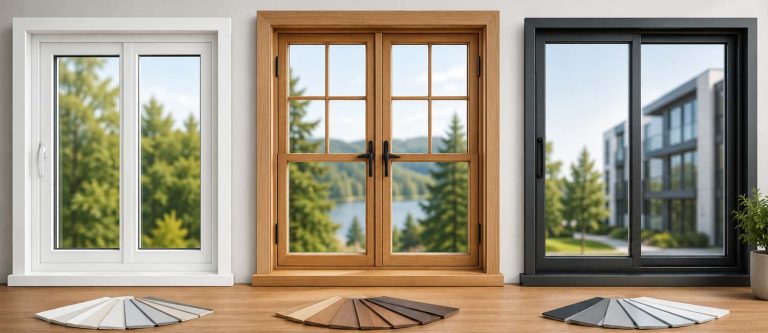
This guide compares the three most popular window frame materials to help you understand their differences and choose the best option for your Canadian home.
Home » Window 101 » Window Frame Types
The window frame is the structural component that surrounds and supports the window sash and insulated glass unit. It keeps the window securely installed within the wall, provides structural strength, helps prevent air and water infiltration, and contributes to the window’s thermal performance.
The material used to manufacture the frame influences several key characteristics, including:
Although modern windows often use similar glazing systems, choosing the right frame material can significantly affect both comfort and long-term ownership costs.
Choosing the right window frame material is one of the most important decisions when buying new windows. The frame affects energy efficiency, durability, maintenance, appearance, and long-term value. While the glass often receives the most attention, the frame plays an equally important role in overall window performance.
Modern homes most commonly use vinyl, wood, and aluminum window frames, each offering unique advantages depending on your budget, climate, architectural style, and maintenance preferences.
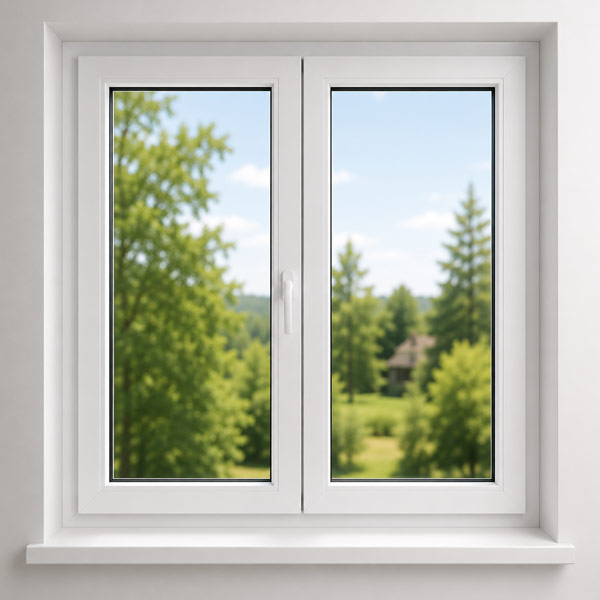
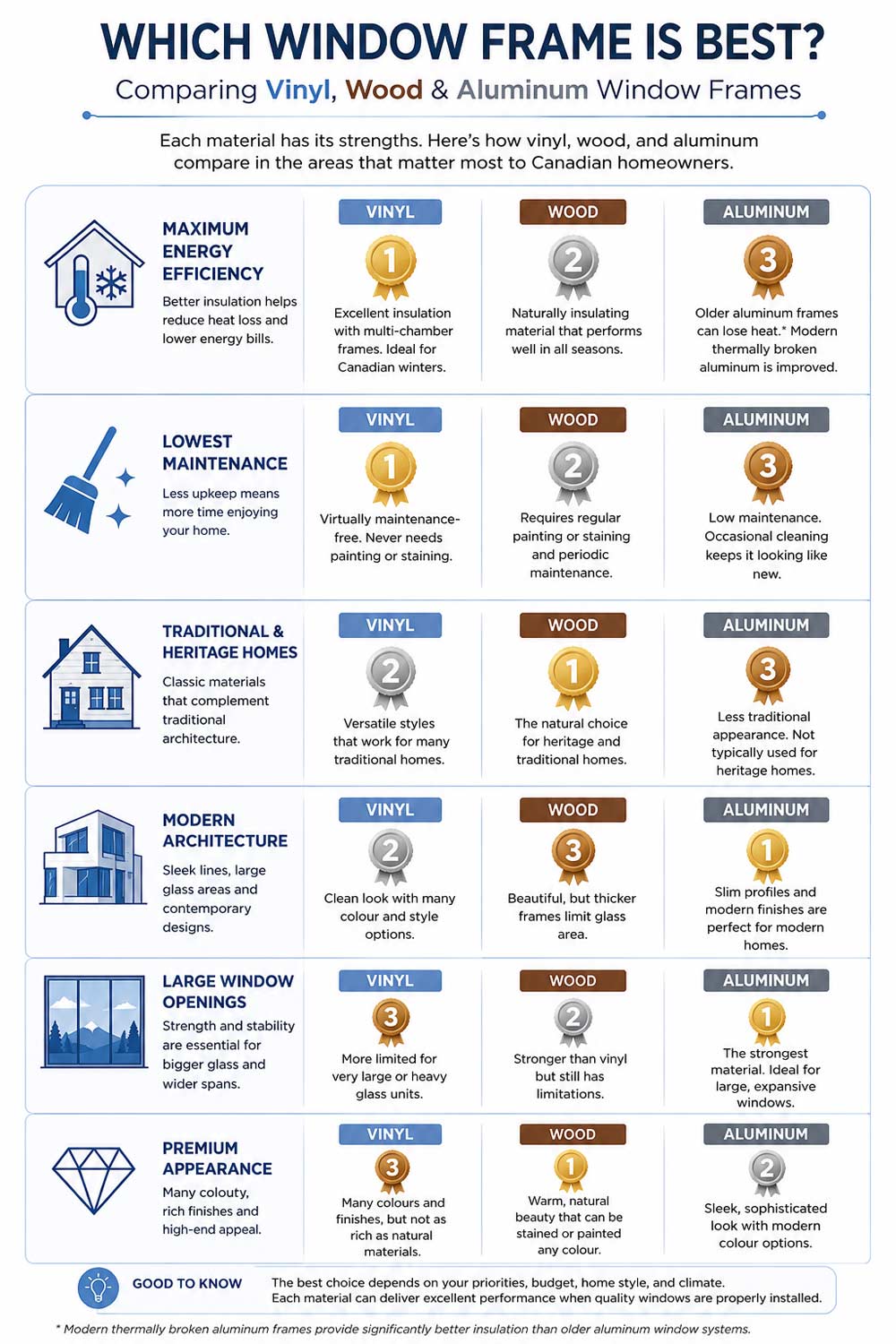
Vinyl is the most popular window frame material in Canada because it combines excellent energy efficiency with minimal maintenance. Multi-chamber uPVC profiles provide strong thermal insulation, resist moisture, and never require painting, making vinyl an excellent choice for homeowners seeking long-term value.
Best for:
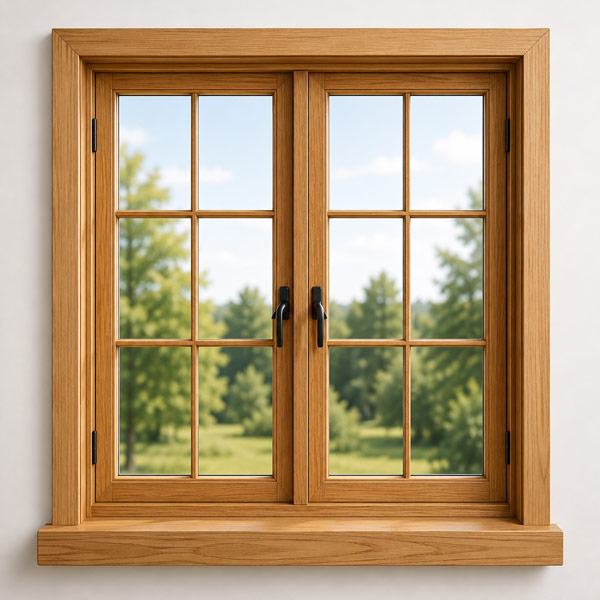
Wood window frames are valued for their natural beauty, warmth, and timeless appearance. They offer excellent natural insulation and can be painted, stained, or restored over time, making them especially popular for heritage, luxury, and custom homes.
Best for:
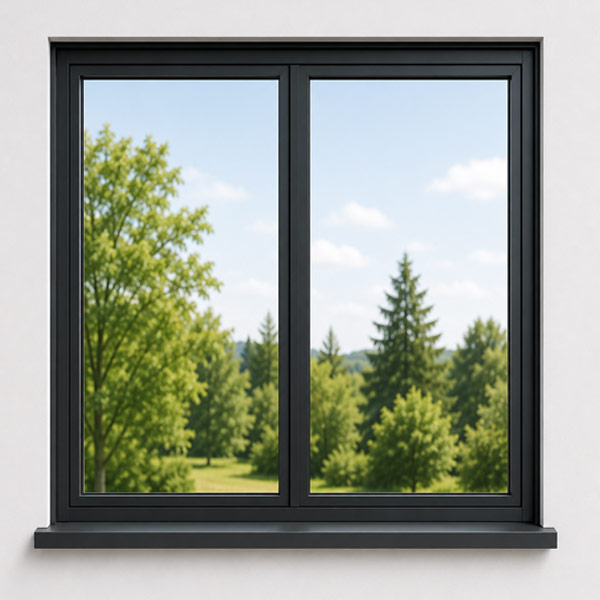
Aluminum frames are known for their exceptional strength and slim profiles, allowing larger glass areas and modern architectural designs. Today’s thermally broken aluminum windows offer improved energy performance while maintaining the sleek appearance that makes aluminum popular in contemporary homes.
Best for:
Each window frame material has strengths and trade-offs. Rather than asking which material is universally “best,” it’s more useful to compare how they perform in the areas that matter most to homeowners, including insulation, durability, maintenance, appearance, lifespan, and cost.
| Feature | Vinyl | Wood | Aluminum |
|---|---|---|---|
| Energy Efficiency | ★★★★★ | ★★★★☆ | ★★★☆☆* |
| Maintenance | ★★★★★ | ★★☆☆☆ | ★★★★☆ |
| Durability | ★★★★☆ | ★★★★☆ | ★★★★★ |
| Appearance | ★★★★☆ | ★★★★★ | ★★★★★ |
| Suitable for Large Windows | ★★★☆☆ | ★★★☆☆ | ★★★★★ |
| Moisture Resistance | ★★★★★ | ★★★☆☆ | ★★★★★ |
| Lifespan | 25–40 years | 40–60+ years | 40–50+ years |
| Typical Cost | $$ | $$$$ | $$$ |
* Modern thermally broken aluminum frames provide significantly better insulation than older aluminum window systems.
Choosing the right window frame involves more than simply comparing materials. Every home has different requirements, and the best choice depends on how you balance energy performance, maintenance, appearance, budget, and long-term value.
Before making your decision, consider the following factors.
Budget
Window frame materials vary significantly in both initial cost and long-term ownership costs. While vinyl is generally the most affordable option, wood typically requires a larger upfront investment and ongoing maintenance. Aluminum often falls between the two, particularly when using high-performance thermally broken frames.
Rather than focusing solely on purchase price, consider the total cost of ownership, including maintenance, durability, and expected lifespan.
Energy Efficiency
The frame material contributes to the overall thermal performance of the window, but it is only one part of the system. Glass type, Low-E coatings, insulated glazing, gas fills, warm-edge spacers, and professional installation all play an important role.
For most Canadian homeowners, selecting an ENERGY STAR® certified window with high-performance glazing will have a greater impact than choosing a frame material alone.
Maintenance Requirements
Some homeowners prefer windows that require little more than occasional cleaning, while others are willing to invest time in preserving natural materials.
Choose a material that matches the level of maintenance you’re comfortable performing over the years.
Architectural Style
Window frames should complement the overall character of your home. Traditional, Craftsman, Victorian, and heritage homes often benefit from the warmth and authenticity of wood, while contemporary homes frequently feature aluminum frames with slim sightlines and expansive glass. Vinyl offers a versatile appearance that works well with many architectural styles.
Selecting a frame material that matches your home’s design helps create a cohesive exterior and interior appearance.
Climate
Canadian weather places unique demands on window performance. Cold winters, seasonal temperature fluctuations, humidity, and wind exposure all influence how a window performs over time. Vinyl and wood naturally provide excellent insulation, while modern thermally broken aluminum frames offer significantly improved thermal performance compared to older aluminum systems. In humid or coastal environments, resistance to moisture and corrosion also becomes an important consideration.
Choosing windows designed for your local climate helps improve comfort, reduce energy loss, and extend the service life of the entire window system.
Window Size and Structural Requirements
Larger window openings require stronger frame materials to support the weight of the insulated glass while maintaining long-term stability.
For expansive picture windows or floor-to-ceiling designs, aluminum’s high structural strength often makes it the preferred choice. Standard residential window sizes, however, can generally be accommodated successfully by vinyl, wood, or aluminum depending on the project requirements.
Lifespan and Long-Term Value
A window frame should be viewed as a long-term investment rather than a short-term purchase.
Consider not only how long the material is expected to last, but also how well it maintains its appearance, how easily it can be repaired, and what maintenance will be required throughout its service life.
In many cases, the best value comes from selecting the material that aligns with your home’s needs and your expectations for durability, comfort, and ongoing maintenance—not simply the least expensive option.
Find practical advice, comparisons, and expert resources to help you choose the right windows for your home.
There is no single “best” window frame for every home. Vinyl is often the best choice for homeowners seeking excellent energy efficiency and low maintenance, wood offers unmatched natural beauty for traditional homes, while aluminum provides superior strength and slim profiles for modern architectural designs.
Yes. Modern aluminum windows with thermal break technology perform well in Canadian climates and meet current energy efficiency standards. Older aluminum frames without a thermal break are far less efficient and are more likely to experience condensation during cold weather.
Yes. Many homes combine different frame materials depending on the application. For example, aluminum may be used for large patio doors or picture windows, while vinyl is installed throughout the rest of the home to maximize energy efficiency and reduce costs. The key is maintaining a consistent architectural appearance.
Both are important, but neither should be considered independently. The overall performance of a window depends on the complete system, including the frame, insulated glass unit, Low-E coatings, gas fills, weatherstripping, and installation quality.
High-quality replacement windows can improve curb appeal, energy efficiency, and buyer confidence, all of which may contribute to a home’s value. However, the increase depends on the overall quality of the window system and how well it complements the property.
Even the highest-quality frame cannot perform as intended if the window is installed incorrectly. Proper installation is essential for preventing drafts, water infiltration, operational problems, and premature wear. Choosing a qualified installer is just as important as selecting the right frame material.
In some situations, damaged frames can be repaired or replaced. However, most modern replacement windows are manufactured as complete units with the frame and insulated glass designed to work together. Whether a frame-only replacement is possible depends on the condition and construction of the existing window.
Higher-quality vinyl windows typically use thicker uPVC profiles, more internal chambers, stronger reinforcement, premium hardware, and better weatherstripping. They also undergo stricter manufacturing and quality control processes. These features contribute to improved energy efficiency, smoother operation, longer lifespan, and better overall performance.