
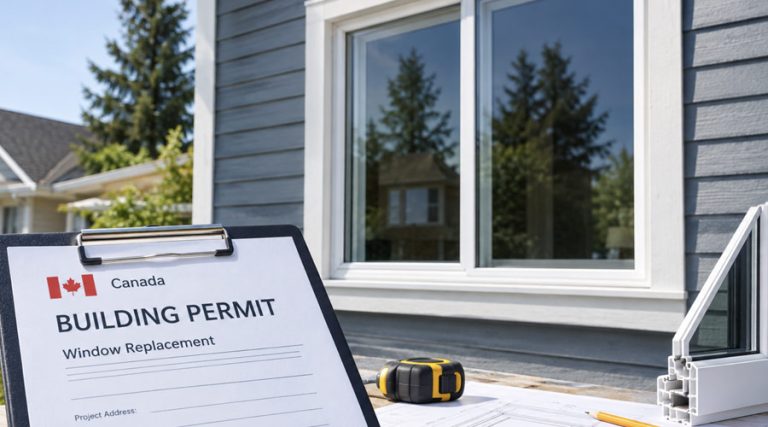
Window Replacement Permit: When You May Need One in Canada
A window replacement permit may be required when the opening, structure, use, appearance or building type changes. Learn what to verify locally before ordering windows or starting work.

Home » Windows Tips » Aluminum vs Wood vs Vinyl Windows: The Ultimate Canadian Guide
In Canada, window frames are more than a design detail; they are a critical barrier against seasonal swings from humid summers to -30°C winters. Your choice of material directly impacts long-term insulation, maintenance costs, and property value.
While the classic debate has focused on wood vs. vinyl, modern engineering has brought high-performance aluminum back into the residential spotlight. This guide provides a technical comparison of these three materials to help you identify the best solution for your specific renovation or construction project.
So the real question is not only:
“Should I choose vinyl, wood, or aluminum windows?”
The better question is:
“Which frame material best fits my climate, budget, maintenance expectations, window size, and home design?”
Vinyl remains the most widely installed window material in Canada, offering an optimal balance of thermal efficiency and affordability. For most residential replacements and new developments, it serves as the industry benchmark for cost-effective weatherproofing.
Unlike older, solid plastic frames, modern vinyl windows feature sophisticated multi-chambered profiles. These internal air pockets function as thermal breaks, significantly reducing heat transfer. This engineering allows vinyl units to achieve the low U-factors mandated by Natural Resources Canada (NRCan) for energy-efficient homes.
While efficient, vinyl has lower structural rigidity than wood or aluminum. To support heavy triple-pane glass, vinyl frames often require thicker profiles, which can slightly reduce the visible glass area. Additionally, vinyl’s high rate of thermal expansion means that professional installation is vital; improper fitting can lead to seal stress and air leakage during the deep-freeze months.
Wood remains the gold standard for luxury custom builds and heritage restorations. Beyond its classic aesthetic, it offers structural and thermal properties that synthetic materials struggle to replicate.
As a natural insulator, wood windows do not conduct heat or cold, keeping frames warm to the touch even in sub-zero temperatures. This inherent efficiency is highly effective at preventing interior condensation, a common challenge for Canadian homeowners during winter. High-end wood units frequently lead the ENERGY STAR certified lists for their ability to maintain a consistent thermal envelope.
The primary trade-off for wood’s performance is its upkeep. In Canada’s harsh environment, the protective finish (paint or stain) must be inspected and refreshed every 3 to 7 years to prevent moisture infiltration and rot. However, when maintained, wood windows are a “lifetime” product, often lasting 50+ years, significantly outperforming the lifespan of vinyl alternatives.
Modern aluminum windows have moved far beyond their industrial roots. Thanks to engineering breakthroughs, they have become a premier choice for contemporary Canadian architecture, particularly for homes requiring expansive glass walls and minimalist aesthetics.
The primary challenge with aluminum is its natural conductivity. Modern residential systems solve this using Thermal Break technology, a reinforced polyamide strip integrated between the interior and exterior frame sections. These systems are engineered to meet the rigorous performance standards verified by Fenestration Canada, ensuring they remain airtight and efficient even during -30°C winters.
While the initial investment for thermally broken aluminum is higher than vinyl, its longevity and zero-maintenance nature make it a high-value asset for modern, long-term properties.
| Feature | Vinyl (uPVC) | Wood | Aluminum (Thermal Break) |
|---|---|---|---|
| Energy Efficiency | Excellent (Multi-chamber) | Superior (Natural Insulator) | Good (with Thermal Break) |
| Maintenance | Low (No painting) | High (Needs staining/painting) | Low (Powder-coated finish) |
| Durability | 20–30 years | 50+ years (if maintained) | 40–50 years |
| Aesthetics | Modern/Thicker frames | Timeless/Elegant | Slim/Minimalist |
| Average Cost | $ | $$$ | $$ – $$$ |
| Best For | Budget-conscious projects | Heritage & Luxury homes | Modern & Contemporary builds |
Simple takeaway: vinyl is usually the best budget-friendly choice, wood is best for luxury and heritage projects, and thermally broken aluminum is best for modern homes with large glass areas.
Compare local window companies, material options, installation quality, and energy-performance packages before choosing a contractor.
For projects that require both the warmth of wood and the durability of metal, Aluminum-Clad Wood is often regarded as the highest-performing configuration in the Canadian fenestration industry.
The design combines a solid wood core with an exterior “armor” of heavy-duty extruded aluminum. This hybrid approach captures the benefits of both materials:
Aluminum-clad windows are engineered to solve two primary challenges: thermal efficiency and maintenance fatigue.
While the upfront cost is higher than vinyl or standard aluminum, the ability to withstand the Canadian freeze-thaw cycle while maintaining a luxury interior makes it a top-tier choice for long-term homeowners.
A window installed in Ontario or the Prairies must maintain its airtight seal while facing annual temperature swings of up to 60°C. Understanding how materials react to the freeze-thaw cycle is critical for long-term performance.
Depending on your local environment, certain materials offer a technical advantage:
Pro Tip: even the highest-rated window will fail without professional installation. Proper shimming, insulation, and caulking are the final barriers against the Canadian climate.
The “best” window material depends entirely on your project’s architecture, budget, and long-term goals. Use the following guide to match a material to your needs:
When making your selection, weigh the upfront cost against long-term durability. While vinyl offers immediate savings, wood and aluminum-clad systems are “lifetime” investments that can significantly increase a property’s resale value and aesthetic appeal.
Whichever material you choose, ensure it is rated for your specific Canadian climate zone to guarantee comfort and efficiency for decades to come.
WindowsDoorsPro helps homeowners compare local companies, window materials, energy ratings, and installation options before starting a project.
Quick answers for homeowners comparing vinyl, wood, and aluminum windows in Canada.
Generally, wood is significantly more expensive than vinyl, often costing 50% to 100% more. This price gap is due to the cost of high-quality raw timber, the craftsmanship required for construction, and the specialized finishing processes. While vinyl is the most budget-friendly option upfront, wood is often viewed as a long-term investment that can increase a home’s resale value.
While it is technically possible to paint vinyl using specialized “PVC-safe” paints, it is generally not recommended. Standard paint will not bond well to the slick surface and will likely peel due to the material’s thermal expansion. Furthermore, painting your vinyl frames can void the manufacturer’s warranty. If you want a specific color, it is best to order factory-laminated or painted vinyl windows from the start.
Yes. For oversized or panoramic “window walls,” aluminum is the superior choice. Aluminum is a much more rigid and stronger material than vinyl, meaning it can support the immense weight of large glass panes with much thinner frames. Vinyl lacks the structural integrity for massive spans and may bow or flex over time if used in applications beyond standard residential sizes.
A window replacement permit may be required when the opening, structure, use, appearance or building type changes. Learn what to verify locally before ordering windows or starting work.

A practical framework for generating qualified window and door leads, selecting channels, controlling response and attribution, and avoiding common compliance and quality failures.

A practical framework for moving qualified window and door opportunities through consistent stages, producing evidence-based forecasts and aligning sales activity with operational capacity.

A practical KPI framework for Canadian window and door companies, with controlled definitions, formulas, reporting rules and management actions.