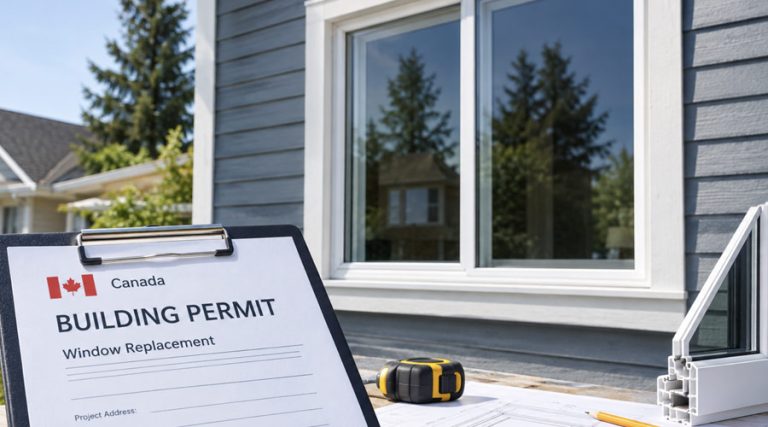
Window Replacement Permit: When You May Need One in Canada
A window replacement permit may be required when the opening, structure, use, appearance or building type changes. Learn what to verify locally before ordering windows or starting work.


Start a garage door repair by identifying whether the problem is with the door, the counterbalance system or the automatic opener. Homeowners can safely check for obvious obstructions, power and remote-control issues, dirty photo eyes, visible damage and model-specific diagnostic codes. Repairs involving springs, lift cables, cable drums, bottom brackets, a crooked or off-track door, structural supports or failed safety systems belong to a trained door systems technician.
Do not keep cycling a door that binds, drops, rises unexpectedly or hangs unevenly. Stop using it, keep people and vehicles clear, and arrange service. A garage door is a heavy moving assembly, and its springs and cables may remain under dangerous tension even when the door is not moving.
This guide explains a safe troubleshooting sequence and how to evaluate the completed repair. It does not provide spring-winding instructions, cable-routing procedures, structural repair specifications or universal opener settings. The current manuals for the exact door and opener control the work.
Requirements vary by location and project. Confirm current rules with the authority having jurisdiction before ordering, selling, or installing products.
Keep the door out of service and call a trained technician if you see or experience any of the following:
DASMA advises that spring-system cables and bottom brackets should be serviced only by trained technicians because of the spring tension connected to them. Amarr’s residential owner guidance similarly warns owners not to remove, repair or adjust springs, cables or identified high-tension hardware.
Do not pull the emergency release while the door is open, crooked or unsupported. If a spring has failed, disconnecting the opener can allow the full door weight to move unexpectedly. Follow the exact opener manual and obtain professional help.
The opener moves the door, but it should not compensate for a binding, damaged or poorly balanced door. Separating the two systems helps identify the correct service path.
From a safe position, note what happens when the control is pressed once. Record whether the motor runs, the lights flash, the door moves evenly, a sensor indicator changes or the system displays a diagnostic code. Stop after one controlled observation if movement is abnormal.
Confirm that the opener has power, the wall control is not in lock or vacation mode, the remote battery is not depleted and the door path is clear. Check the product manual before resetting settings or reprogramming controls. If a confirmed outage is the only apparent issue, manual opening during a power outage may provide access, provided the door is fully closed, mechanically sound and released according to the exact opener manual.
If the opener will open the door but will not close it, look for an object blocking the photo-eye beam. Clean the lenses gently and check whether the indicator lights match the manual. Do not bypass, relocate or defeat an entrapment-protection device.
If the sensors will not stay aligned, a bracket, track, wire or mounting surface may be loose or damaged. Arrange service instead of repeatedly forcing the door closed.
If the door is fully closed, appears evenly supported and the exact opener manual permits the procedure, use the manual disconnect as directed. Operate the door only with its handles or approved gripping points, keeping fingers away from section joints.
The door should travel smoothly and remain controlled. If it binds, feels very heavy, will not stay in the manual test position or moves rapidly on its own, stop. These signs can indicate a balance or spring-system problem requiring a trained technician.
Reconnect the opener according to its manual. Do not use opener force or travel adjustments to make a binding door move. The mechanical door must work correctly before powered operation is restored.

Check power, wall-control lock settings, remote batteries and model-specific diagnostic indicators. If the motor runs but the door does not move, or the door lifts only a short distance and feels heavy, stop. A disconnected trolley, broken spring, cable problem or opener fault requires model-specific diagnosis.
Do not try to lift a door with a suspected broken spring. Do not add temporary lifting devices, pry between sections or attach a vehicle, winch or improvised support.
Remove objects from the doorway and photo-eye path. Clean the photo-eye lenses and compare their indicator lights with the opener manual. Sunlight, a loose bracket, damaged wiring or misalignment may affect some systems, but the corrective procedure is product-specific.
Never tape over a sensor, hold it in a false position or change force settings to overcome a failed safety device. If the problem remains after the manual-approved checks, leave the opener out of service and arrange repair.
Look for an obstruction, ice, debris or an object contacting the bottom seal. Check the photo eyes and consult the opener’s diagnostic code. If the door also binds during safe manual operation, the problem is mechanical rather than a simple opener setting.
A reversal failure is a stop-use condition. The door should not return to powered service until the required tests in the exact opener manual pass.
Noise can come from dry hinges or bearings, loose non-tension hardware, worn rollers, track contact, opener drive components or the spring system. Clean accessible debris and use only the lubricant and locations identified in the door or opener manual. Some plastic components should not be lubricated. A light friction-related squeak at an approved application point may respond to garage door lubrication, provided the component is undamaged and the specified product is used.
Do not lubricate a problem as a substitute for diagnosis. Grinding, popping, cable slap, visible movement at spring supports or worsening noise needs professional inspection.
Stop using both the door and opener. Do not loosen tracks, remove rollers, cut cables or try to push the door back into place. Secure the area without standing beneath the door and call a trained technician.
The technician should identify the cause before returning the door to service. A displaced roller may be the result of track damage, cable tension, impact, loose support or a balance problem rather than an isolated part failure.
Do not operate the door and do not touch the failed component. Springs, cables, drums, anchors and bottom brackets form a counterbalance system. Replacing one component requires the correct parts, tools, procedures and verification of the entire system.
Ask the technician to confirm the spring and cable specification, inspect related hardware, balance the door and document the final test. Whether paired springs should be replaced together depends on the system, product guidance, condition and service recommendation.
A torn perimeter or bottom seal may be replaceable using model-specific parts and instructions when the door is secured and no counterbalance hardware is disturbed. Panel, hinge and roller work can be more complex because component position, door support and spring loading matter.
Do not remove a hinge, roller carrier or fastener merely because it looks accessible. Check the manual and warning labels. Obtain professional service when the repair affects door support, alignment, glazing, wind-load reinforcement or a tension-connected component.
Replace batteries where applicable, confirm lock settings and use the model-specific programming procedure. If one control works and another does not, the issue may be isolated to that device. If no control works, check power and the opener’s diagnostic display.
Before resetting all devices, consider who needs access and whether a lost transmitter should be erased from memory. Connected controls should be re-established only through the manufacturer’s supported process.
The exact owner manuals and warranty terms decide what is permitted. Subject to those instructions and safe conditions, low-risk tasks may include:
Stop if a task requires supporting the door, removing a load-bearing component, changing spring tension, disturbing a cable, loosening a bottom bracket, altering structural attachment, bypassing a safety device or working near exposed electrical parts.
Professional service is appropriate for:
A qualified service provider should identify the defect, explain the repair boundary and verify the complete system after work. Replacing the visible failed part is not enough if another condition caused the failure.
Repair can be reasonable when the damage is isolated, compatible parts are available and the tracks, panels, counterbalance system and opener remain suitable as a system. Replacement may deserve consideration when damage affects multiple sections, structural integrity, product compatibility or safe operation, or when discontinued parts prevent a supported repair.
Ask for a written comparison that identifies:
Do not decide from the visible symptom alone. A noisy roller and a damaged counterbalance system can produce very different risk, scope and cost.
Provide the door and opener manufacturer, model and serial number when available. Describe the symptom, when it started, any impact or power event, error codes, which controls work and whether the door has been taken out of service.
Photograph the overall door and labels from a safe distance. Do not move the door or remove covers to obtain a better image. Tell the service provider if the door is open, crooked, off-track or blocking the only vehicle exit so the company can plan the visit appropriately.
Before authorizing work, ask:
The technician should demonstrate the repaired system before handover. The exact manual controls the procedure, but the review should address:
Do not accept a repair that depends on unusually high opener force, continued manual assistance or a disabled safety device. If a required test fails, keep the system out of service.
Follow the door and opener manuals rather than a generic schedule. DASMA recommends regular owner checks and periodic attention from a trained technician. A practical routine includes watching and listening to a complete cycle, checking for visible wear or damage, keeping the sensor area clear, testing opener safety features as directed and using only approved lubrication points. Keeping a dated record of these checks makes preventive garage door maintenance easier to track and gives the technician useful context if symptoms return.
Seasonal temperature, moisture, road salt and debris can affect doors and hardware in Canadian garages. Cleaning and inspection can reveal corrosion, seal damage or movement before a more serious failure, but maintenance does not make springs, cables or safety-critical hardware suitable for owner repair.
Repairing a garage door begins with a safe diagnosis, not a wrench. Homeowners can check power, controls, obstructions, sensor cleanliness and model-specific diagnostics, then document what they find. Stop as soon as the problem involves balance, springs, cables, bottom brackets, a crooked door, structural damage or a failed safety system.
Use a trained door systems technician for hazardous or product-specific repairs and require the completed door and opener to pass their manual movement, balance and safety tests before returning them to service. For product types, materials and system basics, continue to the verified Garage Door 101 guide.
No homeowner procedure is provided here. A garage door spring stores significant energy, and its cables, drums, anchors and bottom brackets may remain loaded. Keep the door out of service and contact a trained technician.
An obstruction or photo-eye issue is a common possibility. Clear the path, clean the lenses and compare the indicator lights with the exact opener manual. Do not bypass the sensors or increase force to overcome the fault.
No. The opener should move a correctly operating and balanced door. A heavy door can indicate a counterbalance problem and may damage the opener or move unpredictably. Stop and arrange professional service.
Not every sound indicates immediate danger, but new, severe or worsening noise deserves inspection. Stop using the door if noise is accompanied by jerking, uneven cables, visible spring damage, track movement or poor balance.
Often it can, but an off-track door is unstable and can fall or shift. Do not loosen hardware or force the rollers back into the track. A technician should secure the door, identify the cause and verify alignment and balance after repair.
It depends on the extent of damage, panel availability, door construction, alignment and whether the damage affects structural or wind-load performance. Confirm compatibility and compare a documented repair with replacement.
Use the exact door and opener manuals. The technician should demonstrate manual travel and balance, then complete every required opener travel, photo-eye, reversal and entrapment-protection test. Keep the system out of service if any required test fails.
A window replacement permit may be required when the opening, structure, use, appearance or building type changes. Learn what to verify locally before ordering windows or starting work.

A practical framework for generating qualified window and door leads, selecting channels, controlling response and attribution, and avoiding common compliance and quality failures.
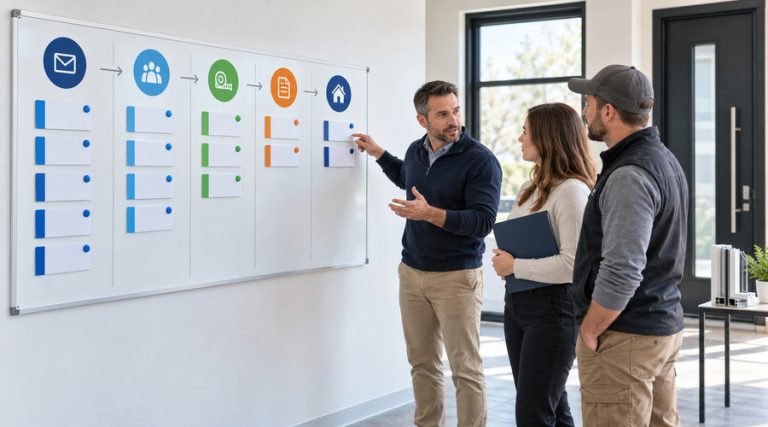
A practical framework for moving qualified window and door opportunities through consistent stages, producing evidence-based forecasts and aligning sales activity with operational capacity.

A practical KPI framework for Canadian window and door companies, with controlled definitions, formulas, reporting rules and management actions.