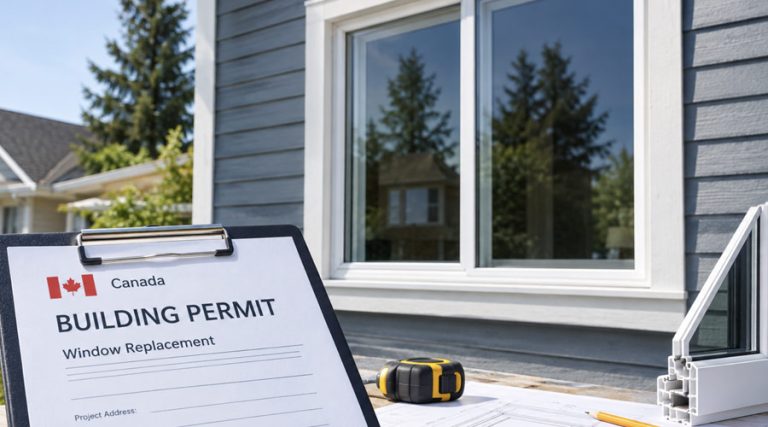
Window Replacement Permit: When You May Need One in Canada
A window replacement permit may be required when the opening, structure, use, appearance or building type changes. Learn what to verify locally before ordering windows or starting work.


Fiberglass entry systems are widely specified across Canadian residential architecture due to their superior dimensional stability and resistance to moisture compared to traditional solid wood. However, exposure to intense seasonal weather cycles combining direct summer ultraviolet (UV) radiation, wind-driven precipitation, and harsh winter freeze-thaw sequences inevitably degrades the factory-applied protective coat. Over time, UV energy breaks down the top resin layers, leaving the surface chalky, micro-cracked, or faded.
Fortunately, fiberglass composite substrates rarely lose their structural integrity from surface weathering alone. Refinishing allows homeowners to strip away degraded clear coats and exhausted pigments, re-establishing a robust moisture and UV barrier at a fraction of the cost of a full entryway replacement.
While surface restoration is entirely feasible as a structured DIY project, success depends entirely on proper diagnostic assessment differentiating between simple cosmetic wear and deep structural or thermal failures. This technical guide outlines a methodical, step-by-step refinishing protocol, examines the chemistry of compatible gel stains and acrylic topcoats, and highlights the critical failure points to avoid for long-term finish durability.
So the real question is not only:
“Can fiberglass doors be refinished?”
The better question is:
“Is the damage only cosmetic, or does the door system have drafts, failed glass, frame damage, or structural problems?”
While the underlying fibreglass-reinforced polymer (FRP) core is practically impervious to rot, the aesthetic and protective layers on the exterior are subjected to severe environmental degradation. The breakdown of an entry system’s finish is driven by a combination of photo-oxidation from ultraviolet rays, thermal fatigue, and moisture ingress.
In Canadian climates, solar radiation acts as the primary catalyst, breaking down the chemical bonds in the clear topcoat. Once this protective shield thins, microscopic moisture penetrates the layer. During winter freeze-thaw cycles, trapped water expands, causing the finish to lift, craze, or peel away from the substrate. Furthermore, physical contact abrasion around handle hardware strips the protective barrier down to bare fiberglass.

Homeowners typically observe these failure mechanisms manifesting as:
Fading and pigment bleaching: Caused by UV-induced destruction of stain colorants, particularly on south- and west-facing exposures that experience peak thermal stress.
Delamination and peeling: Visible as flaking clear coat where moisture has breached the perimeter seal.
Chalking and surface dryness: A powdery residue indicating that the resin binder in the finish has entirely eroded, leaving pigment particles unprotected.
High-contact wear: Localized thinning or scratching around locksets and pull handles.
It is critical to recognize that these manifestations represent surface and coating exhaustion, not structural failure of the entry system itself. Cosmetic degradation does not require full door replacement; rather, it signals the need for a systematic stripping and recoating protocol.
Before committing time and materials to a restoration project, homeowners must perform a rigorous diagnostic evaluation of the entire entry system. One of the most frequent and costly mistakes is investing effort into refinishing a door slab that suffers from systemic frame failure, moisture intrusion behind the jambs, or severe thermal envelope breakdown.
If the deterioration is strictly confined to the outer protective layers, refinishing provides an economical, high-return restoration. However, if structural degradation, warped framing, or thermal seal failures compromise the weather envelope, patching the surface will only mask underlying vulnerabilities.
Simple takeaway: a refinished door can improve appearance dramatically, but it will not solve poor insulation, failed glass, damaged framing, or structural problems.
For homeowners assessing older, drafty entry systems, evaluating overall thermal performance against modern standards such as ENERGY STAR benchmarks established by Natural Resources Canada can help determine whether a cosmetic overhaul is sufficient or if a full system replacement is required to control heating costs.
Deciding whether to apply a translucent gel stain or a solid architectural paint depends primarily on the manufacturing characteristics of the door slab and the degree of previous surface degradation.
Preserving Woodgrain with Gel Stains: Most premium fiberglass entry systems feature an embossed, high-definition woodgrain pattern molded into the composite surface. Because fiberglass is non-porous and will not absorb standard liquid wood stains, gel stains are engineered with high-viscosity resins that sit on the substrate. This allows you to hand-wipe the pigment to mimic the rich, multidirectional grain of natural wood while maintaining structural protection.
When to Transition to Solid Paint: Solid exterior-grade coatings become the mandatory choice when the original finish has suffered extensive UV bleaching, deep patching, or uneven chemical breakdown. Painting is also the preferred path for homeowners seeking a contemporary aesthetic. Solid formulations deliver superior uniform coverage that completely masks underlying blemishes.
Solid architectural hues such as deep charcoal, matte black, dark espresso, and navy blue have become dominant design choices for modern residential entries. However, homeowners must factor in thermal dynamics:
Dark pigments absorb significantly higher amounts of solar radiation compared to light tones.
On a south- or west-facing exposure under intense summer conditions, a dark fiberglass slab can experience sharp localized heating, leading to rapid expansion cycles.
When selecting dark solid paints for high-exposure Canadian entryways, it is critical to use high-performance formulations with advanced solar-reflective or heat-mitigating resins to prevent thermal stress fractures.
Executing a professional-grade fiberglass restoration requires specific preparation and application tools. Assembling the correct materials beforehand ensures workflow continuity and prevents finish defects:
Surface Prep & Cleaning: A heavy-duty TSP (Trisodium Phosphate) substitute or specialized fiberglass cleaner, combined with clean microfiber wiping cloths.
Masking & Protection: High-adhesion blue painter’s tape to isolate weatherstripping, glass inserts, and hardware mounting zones.
Abrasion Materials: Premium fine-grit sandpaper or sanding sponges (specifically 220-grit to 320-grit) designed for controlled surface etching without destroying embossed textures.
Color and Coating Agents: Exterior-grade high-viscosity gel stain (if preserving woodgrain) or 100% acrylic exterior paint (for solid finishes).
Application Tools: High-density foam brushes, synthetic bristle brushes, or lint-free cotton cloths for streak-free pigment distribution.
Protective Barrier: A high-performance, UV-blocking exterior clear coat (marine-grade polyurethane or specialized water-borne exterior urethane) to seal the system against moisture and solar degradation.
Simple Takeaway: Never compromise by substituting exterior-grade products with indoor materials. Assembling specialized, weather-rated supplies before you begin is the single best way to prevent premature peeling and finish failure.
Restoring a fiberglass entry system successfully requires patience, careful preparation, and adherence to proper coating techniques. By following a methodical approach from surface preparation to the final protective barrier, you can achieve a durable, professional-grade finish that withstands harsh weather conditions.
Start by removing the handle set, lock hardware, and any decorative accessories if possible, while carefully applying painter’s tape around glass inserts, hinges, and weatherstripping. Although some homeowners choose to keep the slab hanging, removing the door entirely and placing it horizontally on sawhorses is strongly recommended because it significantly reduces vertical drips and ensures an even, level finish.
Years of accumulated oils, dust, air pollution, and old residue can prevent new coatings from bonding properly. Wash the door carefully using a mild soap or a TSP substitute, avoiding aggressive pressure washing or harsh solvents that could compromise the textured fiberglass surface. Once cleaned, allow the door to dry fully before proceeding to the next step.
If the existing clear coat is peeling or flaking, those compromised areas must be smoothed out first. The objective is not to aggressively strip the entire slab down to raw fiberglass; instead, you should lightly feather the rough edges and remove loose finish to ensure the new coating bonds evenly. Avoid heavy sanding, as it can flatten the embossed woodgrain texture and leave the door looking artificial.
Using fine-grit sandpaper, typically between 220 and 320 grit, scuff the surface to effectively remove gloss, improve overall adhesion, and smooth out minor imperfections. Once sanding is complete, wipe the surface carefully with a clean microfiber cloth to remove all microscopic dust particles before moving forward.
When applying gel stain, work in thin coats while carefully following the direction of the woodgrain texture, as thin layers consistently produce a more realistic finish than heavy applications. While some homeowners attempt to speed up the process by applying a thick coat all at once, this invariably results in unsightly streaking and uneven drying that becomes glaringly obvious in natural daylight.
For solid finishes, use an exterior-grade acrylic paint specifically formulated for fiberglass or composite surfaces, applying multiple lighter coats that outlast a single heavy layer. Always monitor the environmental conditions and adhere to the drying temperatures listed on the product label, as most finishes cure poorly in cold or humid environments.
As one of the most critical stages of the entire project, applying a protective exterior clear coat is non-negotiable. Skipping this step is the primary reason DIY refinishing projects begin to peel and fade prematurely. A quality UV-resistant topcoat provides essential defense against solar damage, moisture intrusion, peeling, cracking, and color degradation. For entry systems exposed to intense direct sunlight, performing a maintenance recoat every few years will significantly extend the lifespan and aesthetic appeal of the finish.
Compare local door companies, installation options, and replacement services before choosing a contractor.
Most fiberglass refinishing failures stem from shortcuts taken during preparation rather than inferior product quality. One of the most critical errors is inadequate surface cleaning; failing to completely strip away accumulated oils, road salt residue, and environmental pollutants traps contaminants beneath the new coating, directly causing premature peeling and adhesion loss.
Beyond preparation shortcuts, DIY projects frequently suffer from several classic pitfalls:
Furthermore, homeowners often procrastinate on maintenance until the finish has entirely failed. Once moisture penetrates through cracked or UV-degraded topcoats into the underlying layers, minor touch-ups are no longer sufficient, turning a simple maintenance recoat into a much more labor-intensive restoration.
DIY refinishing is a viable, cost-effective option for many standard entry doors experiencing moderate surface wear and minor cosmetic fading. However, bringing in a professional service is often worth considering for more complex scenarios, such as:
For Canadian homeowners dealing with aging entryways, professional refinishing typically costs a fraction of a full fibreglass replacement system, making it an exceptionally smart investment whenever the core fibreglass slab and frame remain structurally sound.
Quick answers for homeowners restoring faded, scratched, or dull fiberglass entry doors.
Bringing an old fiberglass door back to life comes down to respecting the process: thorough cleaning, gentle sanding, thin layers of quality stain or paint, and a robust UV-resistant topcoat. Take your time with the prep work, use products designed to withstand outdoor elements, and you’ll enjoy a professional-grade result that transforms your home’s entire entrance.
A window replacement permit may be required when the opening, structure, use, appearance or building type changes. Learn what to verify locally before ordering windows or starting work.

A practical framework for generating qualified window and door leads, selecting channels, controlling response and attribution, and avoiding common compliance and quality failures.

A practical framework for moving qualified window and door opportunities through consistent stages, producing evidence-based forecasts and aligning sales activity with operational capacity.

A practical KPI framework for Canadian window and door companies, with controlled definitions, formulas, reporting rules and management actions.