
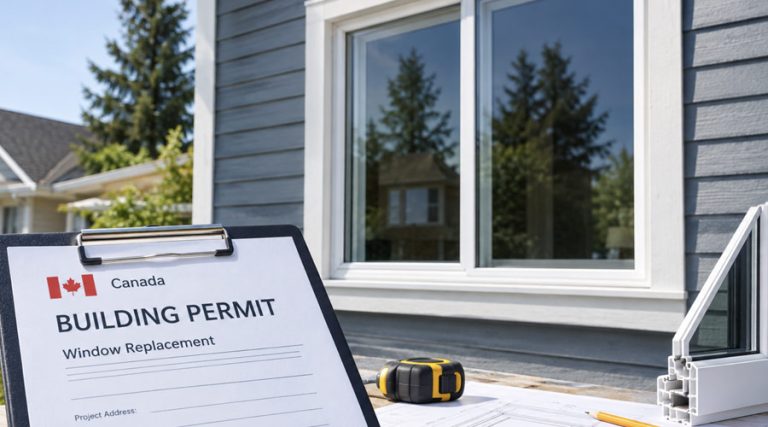
Window Replacement Permit: When You May Need One in Canada
A window replacement permit may be required when the opening, structure, use, appearance or building type changes. Learn what to verify locally before ordering windows or starting work.

Home » Doors Tips » Garden Doors vs French Doors: What Is the Difference?
Many homeowners use the terms “garden doors” and “French doors” interchangeably, assuming that any double-door patio system with glass panels is the same. While both belong to the patio door family and connect indoor living spaces to a deck or backyard, they function very differently.
The core distinction comes down to operation: garden doors typically feature one active, operable panel and one fixed panel, whereas true French doors allow both panels to swing open. For Canadian homeowners planning a replacement or renovation, understanding how this mechanical difference impacts thermal performance, daily household traffic, and security during harsh winters is essential to avoiding costly installation mistakes.
So the real question is not only:
“Should I choose garden doors or French doors based on looks alone?”
The better question is:
“Does my current door rough opening allow for a dual-operating system, or will structural framing and complex sealing requirements demand a simpler single-active setup?”
These doors mount into the structure in very different ways. Garden doors generally sit on a pre-hung, unified frame where only one side moves, making them much more forgiving during installation and easier to square up within existing wall framing. French doors, by contrast, require absolute precision on both sides. Because both panels operate and bear weight, the rough opening must be framed, shimmed, and anchored with extreme accuracy. In Canadian homes where seasonal shifting and settling occur, a dual-operating French door system demands heavy-duty multi-point anchoring and precise threshold sealing to prevent structural air leaks over time
| Feature | Garden Doors | French Doors |
|---|---|---|
| Operation | Usually one active panel | Both panels can open |
| Appearance | Slightly more modern and practical | More symmetrical and traditional |
| Energy Efficiency | Often slightly better | Depends heavily on sealing quality |
| Opening Width | More limited | Wider access possible |
| Maintenance | Usually lower | More moving parts to maintain |
Simple takeaway: garden doors usually win on simpler operation and sealing, while French doors usually win on wider access and a more traditional symmetrical look.
While both options feature expansive glass panels, their design philosophy and visual weight in a room differ notably:
French Doors (The Traditional Aesthetic): French doors are built on symmetry. Both panels match in width, creating a balanced, classic look that complements traditional architecture, heritage-style homes, or rooms where you want a distinct statement piece. With no central mullion or fixed post interrupting the view when both doors are open, they offer an uninterrupted, grand sightline.
Garden Doors (The Modern & Streamlined Look): Garden doors lean toward subtle functionality. Typically featuring one operable glass panel paired with a matching fixed sidelite or half-panel, they provide a cleaner, less cluttered appearance. This asymmetrical or semi-fixed layout often works exceptionally well in transitional or modern home designs where minimal visual distraction is preferred.
Additionally, grille patterns (SDL/GBG grids) are frequently applied differently to these styles. French doors traditionally feature a heavier, multi-lite grid pattern to emphasize their classic heritage, whereas garden doors often favor clean, wide-view glass panes that maximize natural light intake.
Compare local door companies, installation options, and patio door systems before choosing a contractor.
Beyond how many panels swing, the real impact of these doors comes down to how they integrate with your room’s layout and outdoor living space:
Clearance and Swing Space: Both styles require clearance either inside or outside for the panels to swing. However, French doors require double the swing radius if you open both sides simultaneously. In tighter rooms or spaces with bulky indoor furniture (like sectionals or dining sets), managing a wide double-swing arc can severely restrict your interior layout.
Traffic Patterns & Furniture Movement: French doors shine when you need to move large, bulky objects such as a large outdoor patio table, a new couch, or appliances straight from the kitchen or living room to the backyard. Garden doors, while offering a narrower single-panel clearance, are often much easier to manage for everyday foot traffic, pet exits, and children running in and out without letting out all the indoor climate-controlled air.
Screen Integration (Retractable vs. Swinging): Functionality heavily depends on how screens are handled. French doors typically require double retractable screens or central overlapping screens, which can sometimes be prone to wind flutter. Garden doors frequently accommodate standard swinging or single sliding screen setups, which are generally more durable against heavy daily use.
In a Canadian climate where extreme winter freezes test every component of a home’s envelope, energy efficiency is often the deciding factor. While both styles can achieve high ratings when built correctly, their underlying mechanics create distinct thermal differences:
The Challenge of the Center Seal: French doors feature two operable panels meeting in the middle. This central meeting stile introduces an extra vertical joint along the entire height of the door. Over time, building settling or heavy daily use can cause microscopic shifts in this center gap, leading to drafts or uneven compression on the weatherstripping.
Simpler Perimeter Integrity: Garden doors typically rely on a single active panel sealing directly into a rigid, unified mainframe. Because there is only one operational perimeter to manage, maintaining a tight, airtight seal against winter winds is mechanically simpler.
Glass Packages and Ratings: Regardless of the style chosen, true thermal performance comes down to the glass package. For Canadian winters, upgrading from standard double-pane to ENERGY STAR-certified triple-pane glass with Low-E coatings and inert argon or krypton gas fill is essential. Furthermore, ensure the doors feature multi-point locking systems instead of a standard single latch to pull the panels tightly against the weatherstripping and lock out sub-zero drafts.
Climate-Smart Takeaway: While both door styles can be built to handle sub-zero temperatures, garden doors offer inherent mechanical advantages against drafts due to their single-active perimeter, whereas high-performance French doors require precise multi-point hardware and professional installation to achieve the same thermal reliability.
When it comes to securing a patio entrance often a prime target for home intrusions both door styles can be exceptionally secure, but they achieve it through different hardware setups:
Security Architecture: Because French doors have two active panels, they require a robust multi-point locking system on the primary active door, plus heavy-duty astragal bolts (top and bottom) to secure the secondary passive panel firmly into the frame. Without top-and-bottom shoot bolts, a passive French door panel remains a weak point against physical forced entry. Garden doors are inherently more secure out of the box because the stationary panel is permanently fixed to the frame, leaving only one operational edge to secure.
Long-Term Maintenance & Alignment: Hardware longevity depends heavily on daily use. French doors feature more moving parts double hinges, dual handles, and multi-point mechanisms on both sides making them prone to minor sagging over years of heavy traffic. Periodic hinge adjustments and latch alignment are almost always required. Garden doors have fewer moving components, reducing long-term wear and tear on the frame and keeping seasonal maintenance minimal.
Which Option Works Better for Canadian Winters?
When winter temperatures plunge and severe freeze-thaw cycles kick in, patio doors face their ultimate test. In Canada, where structural shifting due to deep frost and heavy winds put immense pressure on home exteriors, the choice often comes down to long-term climate resilience.
The Freeze-Thaw Factor: Repeated temperature swings cause building materials to expand and contract. French doors, with their dual-operating panels and complex meeting stiles, are more susceptible to minor misalignments over several winters if the framing shifts.
Wind and Snow Loads: High wind pressures common in open Canadian regions can test the perimeter sealing of large glass areas. While properly installed multi-point French systems hold up exceptionally well, single-active garden doors generally offer a more foolproof, rigid barrier against aggressive wind-driven drafts.
The Bottom Line on Climate: Ultimately, winter performance is less about the general door label and more about regional building codes, proper flashing, and certified ratings. For deep-dive guidance on upgrading your home’s thermal envelope and checking national performance standards, review the home energy efficiency guidelines provided by Natural Resources Canada.
When budgeting for a patio door replacement in Canada, the total cost includes more than the initial sticker price. Prices vary heavily depending on materials, glass type, frame quality, hardware, and installation complexity.
In general, standard garden doors are often slightly less expensive, while premium French doors command a higher price due to additional hardware and dual operable panels. Across Canada, full patio door replacement projects commonly range from around CAD $3,000–$5,000 for simpler systems, up to CAD $8,000+ for large, high-efficiency premium installations.
Here is how the core financial factors break down between the two styles:
| Cost Factor | Garden Doors | French Doors |
|---|---|---|
| Initial Product Price | Lower to moderate (simpler standardized single-active manufacturing) | Higher upfront cost (requires dual active panels and heavy astragals) |
| Installation & Labor | More efficient (unified pre-hung unit simplifies framing and alignment) | More expensive and complex (demands absolute framing precision and shimming) |
| Long-Term Financial Return | Reliable long-term savings with minimal draft-related heating loss | Requires high-end specs and professional care to avoid adjustment costs |
Choosing between garden doors and French doors ultimately depends on your property’s architectural style, layout, and daily household needs.
Traditional and Heritage Homes: French doors are typically the best match for older, classic properties. Their symmetrical dual-swing design respects historical architectural standards and preserves the timeless aesthetic expected in heritage homes.
Modern and Transitional Spaces: Garden doors offer a cleaner, less cluttered appearance. With one operating panel and a fixed sidelite, they integrate smoothly into contemporary home designs without overwhelming the wall space.
High-Traffic Family & Pet Exits: Garden doors excel in busy households. Because the secondary panel stays permanently fixed to the frame, daily foot traffic, children, and pets wear down only one operating hinge and latch point, minimizing long-term maintenance.
Frequent Entertaining and Moving Large Items: French doors provide the ultimate advantage when you need maximum clearance. Opening both panels fully creates a wide, unobstructed entryway, making it easy to carry large furniture, party platters, or oversized equipment in and out.
Compact Layouts and Small Rooms: Garden doors are far more forgiving in tighter interior spaces. By cutting the door swing radius in half compared to a double-active French system, they preserve precious floor space for furniture placement and interior flow.
Quick answers for homeowners comparing patio door styles, energy efficiency, cost, and cold-climate performance.
Not exactly. Garden doors usually have one active panel and one fixed panel, while French doors often allow both panels to open.
Garden doors are often slightly easier to seal because they typically have fewer moving parts, although high-quality French doors can also perform very efficiently.
In many cases, yes. French doors often include more hardware and additional operable components that increase both product and installation costs.
Yes, especially modern systems with insulated glass, quality weatherstripping, and multi-point locking hardware.
Choosing between garden and French doors isn’t just an aesthetic decision; it’s an investment in your home’s thermal envelope, daily comfort, and long-term durability.
Choose Garden Doors if: You want reliable, low-maintenance thermal performance through harsh freeze-thaw cycles, need to conserve interior floor space, and prefer a practical entryway optimized for everyday family traffic.
Choose French Doors if: You prioritize traditional architectural symmetry, require maximum clearance for entertaining or moving large items, and are fully prepared to invest in professional installation and periodic hardware adjustments.
Ultimately, the best patio door is the one rated for your specific regional climate zone, installed with precision flashing, and tailored to how your household actually lives. When quality installation meets the right design, your patio doors will deliver comfort and security for decades.
A window replacement permit may be required when the opening, structure, use, appearance or building type changes. Learn what to verify locally before ordering windows or starting work.

A practical framework for generating qualified window and door leads, selecting channels, controlling response and attribution, and avoiding common compliance and quality failures.

A practical framework for moving qualified window and door opportunities through consistent stages, producing evidence-based forecasts and aligning sales activity with operational capacity.

A practical KPI framework for Canadian window and door companies, with controlled definitions, formulas, reporting rules and management actions.