
Home » Window 101 » Parts of a Window: A Complete Guide to Window Anatomy
Learn the name, location, and function of every major component found in modern residential windows, from the frame and sash to the insulated glass unit and hardware.
A window is a complete system made up of a frame, glass unit, sash, seals, hardware, and drainage components. Each part has a specific role in how the window opens, locks, insulates, and protects the home from air and water infiltration.
Basic Window Components
Although the exact design depends on whether the window is fixed, casement, awning, sliding, single-hung, or double-hung, these basic components are found in most modern Canadian window systems.
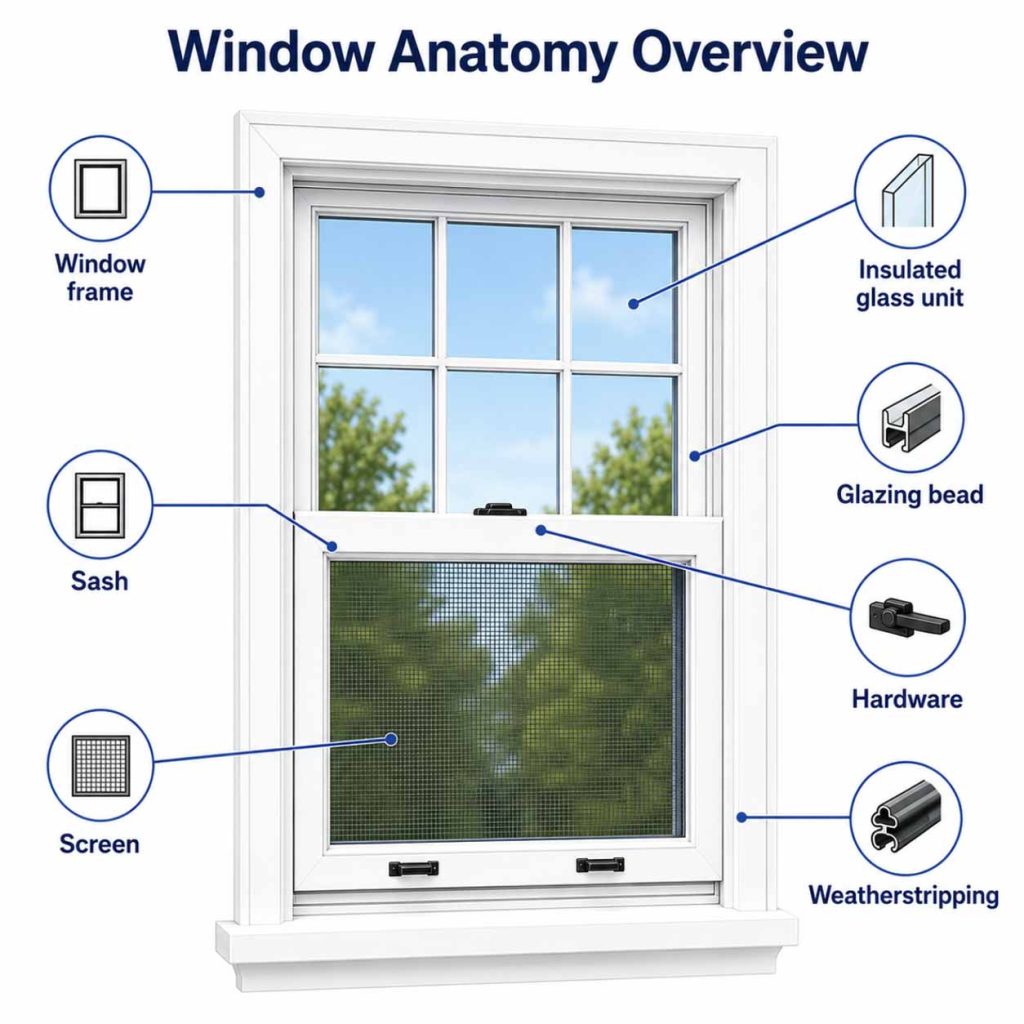
The window frame is the fixed outer structure that surrounds and supports the entire window. It is installed inside the rough opening in the wall and remains stationary when the window is opened.
Modern Canadian replacement windows commonly use vinyl frames because vinyl is durable, low-maintenance, moisture-resistant, and capable of providing good thermal performance.
The frame consists of three main sections.
The head is the horizontal section across the top of the window frame.
It helps support the upper part of the window assembly and connects the two side jambs.
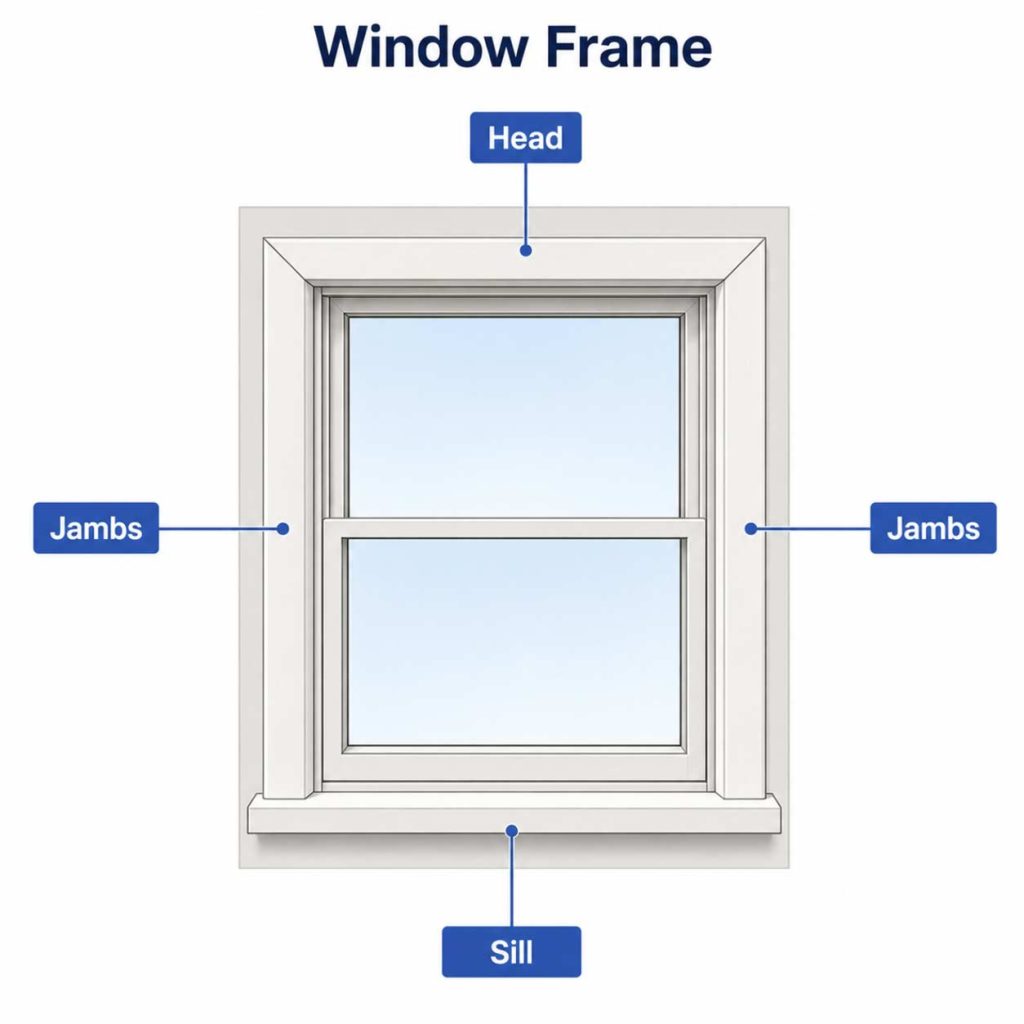
The jambs are the vertical sections located on each side of the window frame.
They support the sash and may also contain hinges, tracks, locks, or other operating hardware, depending on the window style.
The sill is the horizontal section at the bottom of the window frame.
Its design helps manage rainwater and direct moisture toward the exterior. In many modern windows, the sill contains internal drainage channels and small openings known as weep holes.
Important: The window sill is part of the window frame. The interior ledge below the window is more accurately called a stool, although many homeowners also refer to it as a sill.
The sash is the section of the window that holds the glass unit.
In an operable window, the sash is the part that opens or moves. In a fixed or picture window, the glass remains permanently secured inside the frame and there may be no separate operable sash.
The way the sash moves depends on the window style:
The sash usually contains the insulated glass unit, glazing bead, weatherstripping, and part of the locking hardware.
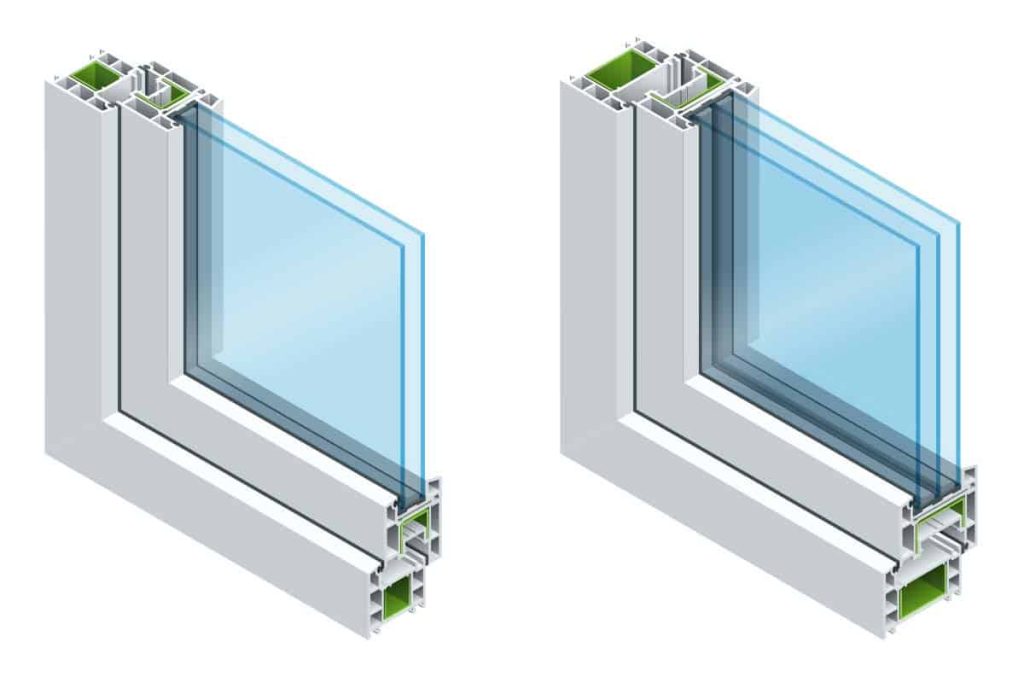
The panes are the individual sheets of glass inside the insulated glass unit.
Double-pane windows have two panes, while triple-pane windows have three. Adding another pane creates an additional insulated chamber, which can improve thermal performance, interior comfort, and sound reduction.
The glass may also be:
A Low-E coating is an extremely thin metallic layer applied to one or more surfaces inside the insulated glass unit.
It is designed to reduce radiant heat transfer while still allowing natural light through the window. Depending on the glazing package, Low-E coatings can help retain indoor heat during Canadian winters and limit unwanted solar heat during warmer months.
Because the coating is located on a protected interior glass surface, homeowners normally cannot touch or damage it during regular window cleaning.
The sealed spaces between the glass panes may be filled with an insulating gas, most commonly argon.
Argon conducts heat less readily than ordinary air, helping slow heat transfer through the centre of the glass unit. Krypton may also be used in some higher-performance glazing systems, although argon is more common in residential windows.
The gas is colourless, odourless, and safely contained within the sealed glass unit.
The spacer runs around the perimeter between the panes of glass. It maintains the correct distance between them and helps create the sealed insulating chamber.
Traditional metal spacers can conduct heat around the edge of the glass. Modern warm-edge spacer systems use materials designed to reduce heat transfer and keep the interior edge of the glass warmer.
This can improve energy performance and may help reduce the risk of condensation forming near the edges of the glass.
The panes and spacer are held together by a perimeter sealing system.
This seal prevents outside air and moisture from entering the insulated glass unit and helps keep the insulating gas inside. When the seal fails, moisture may enter the space between the panes and create fogging or condensation that cannot be wiped away from either side.
Persistent condensation between the panes usually indicates a failed sealed glass unit rather than excess humidity on the room-side surface.
The glazing bead is a narrow strip that secures the insulated glass unit inside the sash or frame.
It runs around the perimeter of the glass and can usually be removed by a window professional when the sealed unit needs to be replaced.
The glazing bead is not the same as the spacer. The bead is visible around the edge of the glass, while the spacer sits between the panes inside the sealed glass unit.
Find window professionals who can help you plan, compare, and complete your project.
Window hardware includes the mechanical components used to open, close, support, and lock the sash.
The exact hardware depends on the window style.
Casement and awning windows normally use a crank handle connected to an operating mechanism.
Turning the handle moves the sash outward or pulls it back into the frame. Some modern handles fold down when not in use, helping them fit more neatly behind blinds and curtains.
The operator is the mechanical assembly that controls the movement of a casement or awning sash.
It is usually located near the bottom of the frame and connects the crank handle to the sash through one or more metal arms.
If the handle turns but the window does not move correctly, the operator or one of its connecting arms may be worn or damaged.
Hinges connect the operable sash to the frame and guide its movement.
Casement windows use hinges along the side, while awning windows are hinged near the top. Window hinges differ from standard door hinges because they often include sliding tracks that control how the sash moves away from the frame.
A window lock pulls the sash securely against the frame.
The keeper is the part attached to the opposite surface that receives the lock. When the window is locked, these components create a tighter compression seal against the weatherstripping.
Some taller casement windows use multipoint locking systems. A single handle activates multiple locking points along the sash, helping create even pressure around the frame.
Sliding windows use tracks to guide the sash horizontally.
Small rollers located beneath the sash help it move along the track. Dirt, debris, worn rollers, or a damaged track can make the window difficult to slide.
Single-hung and double-hung windows use a balance system to support the weight of the moving sash.
The balance allows the sash to stay open instead of falling closed. Depending on the window design, the system may use springs, cords, or concealed mechanisms inside the jambs.
Modern window frames are designed to manage small amounts of rainwater that may enter their exterior drainage areas.
Drainage channels direct this water toward weep holes, which are small openings located along the exterior bottom section of the frame. Weep holes allow water to escape instead of collecting inside the window system.
They should not be permanently sealed with caulk, paint, or expanding foam. Blocked drainage openings can prevent water from leaving the frame and may contribute to moisture problems.
The rough opening is the framed opening in the wall where the window is installed.
It is made slightly larger than the window unit so the installer can position, level, square, and secure the frame. The narrow space between the window and the rough opening is called the installation gap.
This gap is typically insulated and sealed to reduce air and water leakage. Even a high-performance window may develop drafts, water intrusion, or operating problems when the frame is installed out of square or the surrounding gap is not sealed correctly.
Flashing helps direct water away from the rough opening and prevents it from entering the wall assembly. Depending on the type of installation, the system may include flashing tape, a sill pan, membranes, metal flashing, or integrated window flanges.
Exterior sealant is then used at appropriate joints around the window. Sealant should protect the installation without blocking the drainage openings built into the frame.
Find practical advice, comparisons, and expert resources to help you choose the right windows for your home.
The frame is the fixed outer structure installed in the wall. The sash is the section that holds the glass and moves when an operable window is opened.
The sealed glass assembly is called an insulated glass unit, or IGU. It usually contains two or three panes separated by sealed insulating spaces.
The insulated glass unit is secured inside the sash or frame by glazing beads. A spacer separates the individual panes inside the sealed glass unit.
The bottom horizontal section of the window frame is called the sill. The interior ledge below the window may be called a stool, although it is also commonly referred to as an interior sill.
They are usually weep holes. They allow water to drain from channels inside the frame and should not be permanently blocked.
It is generally called weatherstripping. It seals the joint between the operable sash and frame to reduce drafts, rain, and dust.
The spacer is located between the glass panes and maintains the sealed space inside the insulated glass unit. The glazing bead is installed around the visible edge of the glass to hold the complete glass unit inside the sash or frame.
In many modern windows, a failed or damaged insulated glass unit can be replaced while keeping the existing frame and sash. Whether this is practical depends on the condition, age, design, and warranty status of the window.
Not necessarily. Window manufacturers may provide different warranty periods for the frame, insulated glass unit, hardware, screens, finishes, and labour. Homeowners should review the specific warranty terms supplied with their windows.