
Home » Window 101 » Energy Efficient Windows
Explore the technologies, ratings, and features that make modern replacement windows more comfortable, efficient, and built for Canadian homes.
Energy-efficient windows are designed to reduce heat transfer, helping maintain comfortable indoor temperatures throughout the year. Modern window systems combine insulated glass, Low-E coatings, argon gas, warm-edge spacers, and energy-efficient frames to reduce heat loss during Canadian winters and limit unwanted heat gain in summer.
Whether you’re replacing outdated single-pane windows or upgrading older double-pane units, today’s energy-efficient windows can improve comfort, reduce drafts and condensation, lower energy consumption, and increase the long-term value of your home.
Benefits of Energy Efficient Windows
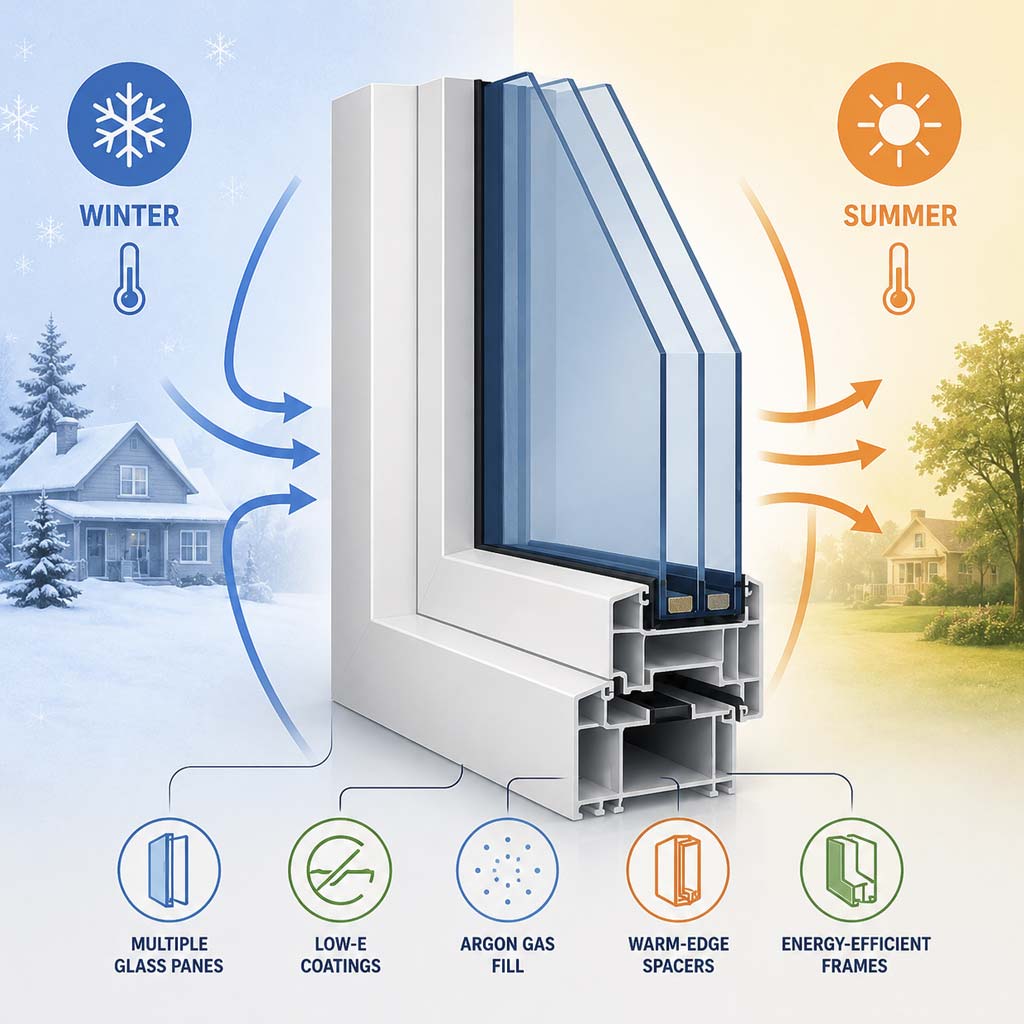
Two or three panes of insulated glass dramatically reduce heat transfer compared to older single-pane windows.
Microscopic Low-E coatings reflect heat while still allowing natural daylight to enter your home.
Argon gas between the glass panes improves insulation and slows heat transfer.
Modern spacers reduce heat loss around the edge of the insulated glass unit while helping prevent condensation.
Modern insulated frames reduce heat transfer, helping improve energy efficiency and indoor comfort.
Find practical advice, comparisons, and expert resources to help you choose the right windows for your home.
Double- and triple-pane windows are the foundation of today’s energy-efficient window systems. By creating sealed insulating air spaces between the panes of glass, they significantly reduce heat transfer compared to older single-pane windows.
For most homes across Southern Ontario, high-quality double-pane windows provide excellent performance. Triple-pane windows offer even greater insulation and are often recommended for colder regions, larger window openings, or homeowners looking to maximize comfort and energy savings.
| Feature | Double Pane | Triple Pane |
|---|---|---|
| Insulation | Excellent | Outstanding |
| Energy Efficiency | High | Maximum |
| Noise Reduction | Good | Excellent |
| Weight | Lighter | Heavier |
| Cost | Lower | Higher |
Low-emissivity (Low-E) coatings are ultra-thin, nearly invisible metallic layers applied to the glass surface. They reflect heat back toward its source—keeping warmth inside during winter and reducing solar heat gain during summer.
Because Canadian homes experience both harsh winters and warm summers, Low-E glass has become a standard feature in modern replacement windows.
The space between insulated glass panes is typically filled with argon gas rather than ordinary air. Argon is denser than air, making it a more effective insulator and improving the overall thermal performance of the window.
This enhancement works continuously without requiring maintenance and contributes to better comfort and energy efficiency.
Spacers separate the panes of glass within an insulated glass unit. Modern warm-edge spacers reduce heat transfer around the perimeter of the window and help minimize condensation during cold weather.
While often overlooked, they play an important role in the overall efficiency of the entire window system.
Window frames play an important role in overall energy performance. Modern vinyl, fiberglass, composite, and thermally broken aluminum frames are designed to reduce heat transfer, improve insulation, and create a tighter seal around the glass unit.
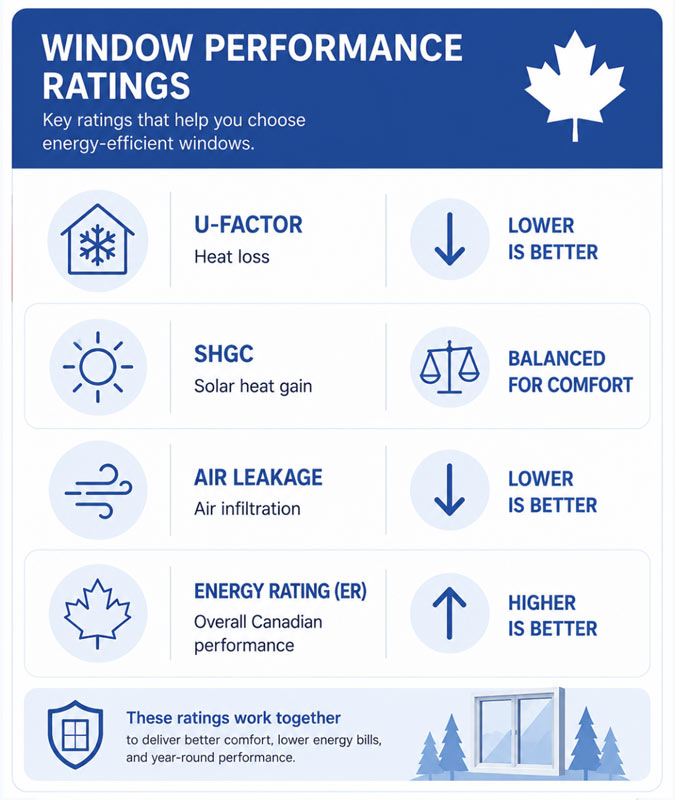
Understanding a few key performance ratings can make comparing windows much easier.
Measures heat loss through the window. Lower values indicate better insulation and improved winter performance.
Measures how much solar heat passes through the glass. The right SHGC helps balance natural warmth in winter and keeps excess heat out during summer.
Measures the amount of air that passes around the window. Lower ratings mean fewer drafts and better indoor comfort.
A Canadian performance rating that combines several efficiency factors into one score. Higher ER values generally indicate better overall energy performance for Canadian climates.
ENERGY STAR® certification helps homeowners identify windows that meet strict energy performance requirements for Canada’s climate zones.
Certified windows undergo independent testing and are evaluated based on thermal performance, air leakage, and overall energy efficiency. Choosing ENERGY STAR® certified windows provides confidence that the product is designed to perform well in Canadian weather conditions.
Different types of windows provide different levels of airtightness. Fixed and compression-sealed windows generally offer the strongest energy performance, while sliding designs rely more heavily on weatherstripping. However, glass packages, frame construction, and professional installation also affect the efficiency of the complete window system.
| Window Style | Energy Performance | Why It Matters |
|---|---|---|
| Casement | ★★★★★ | A compression seal creates one of the tightest closures. |
| Awning | ★★★★★ | Provides excellent weather resistance and airtight performance. |
| Picture | ★★★★★ | Its fixed design eliminates air leakage through operating parts. |
| Hung Windows | ★★★★☆ | Offers good efficiency when fitted with quality weatherstripping. |
| Sliding Windows | ★★★☆☆ | Sliding operation provides fewer compression seals than hinged styles. |
Even the most energy-efficient window can lose much of its performance if it isn’t installed correctly. Proper installation is just as important as choosing high-quality glass, frames, and hardware, because even small gaps around the frame can allow air and moisture to enter the home.
Professional installers ensure the window is accurately measured, shimmed, leveled, insulated, and sealed according to manufacturer specifications. This helps create a continuous thermal barrier around the entire opening while maintaining smooth operation and structural stability.
A properly installed window offers several long-term benefits:
When evaluating replacement windows, remember that the window itself is only part of the system. The quality of the installation has a direct impact on comfort, energy performance, and the lifespan of your investment.
Find window professionals who can help you plan, compare, and complete your project.
High-quality energy-efficient windows can last 20–30 years or longer when professionally installed and properly maintained.
Yes. Double- and triple-pane glass, insulated frames, and quality seals can significantly reduce outdoor noise compared to older windows.
They can greatly reduce condensation, but indoor humidity levels and ventilation also affect how much condensation forms during cold weather.
Weatherstripping and caulking may improve performance, but older windows cannot match the insulation and energy efficiency of modern replacement windows.
No. Regular cleaning, occasional hardware lubrication, and inspecting weatherstripping are usually all that’s needed to keep them performing well.